Families Get Answers As Bhakra Canal Van Is Found
A rusted van pulled from Punjab's Bhakra Canal has ended a 26-year search for four wedding guests, including a child whose uniform was found inside.
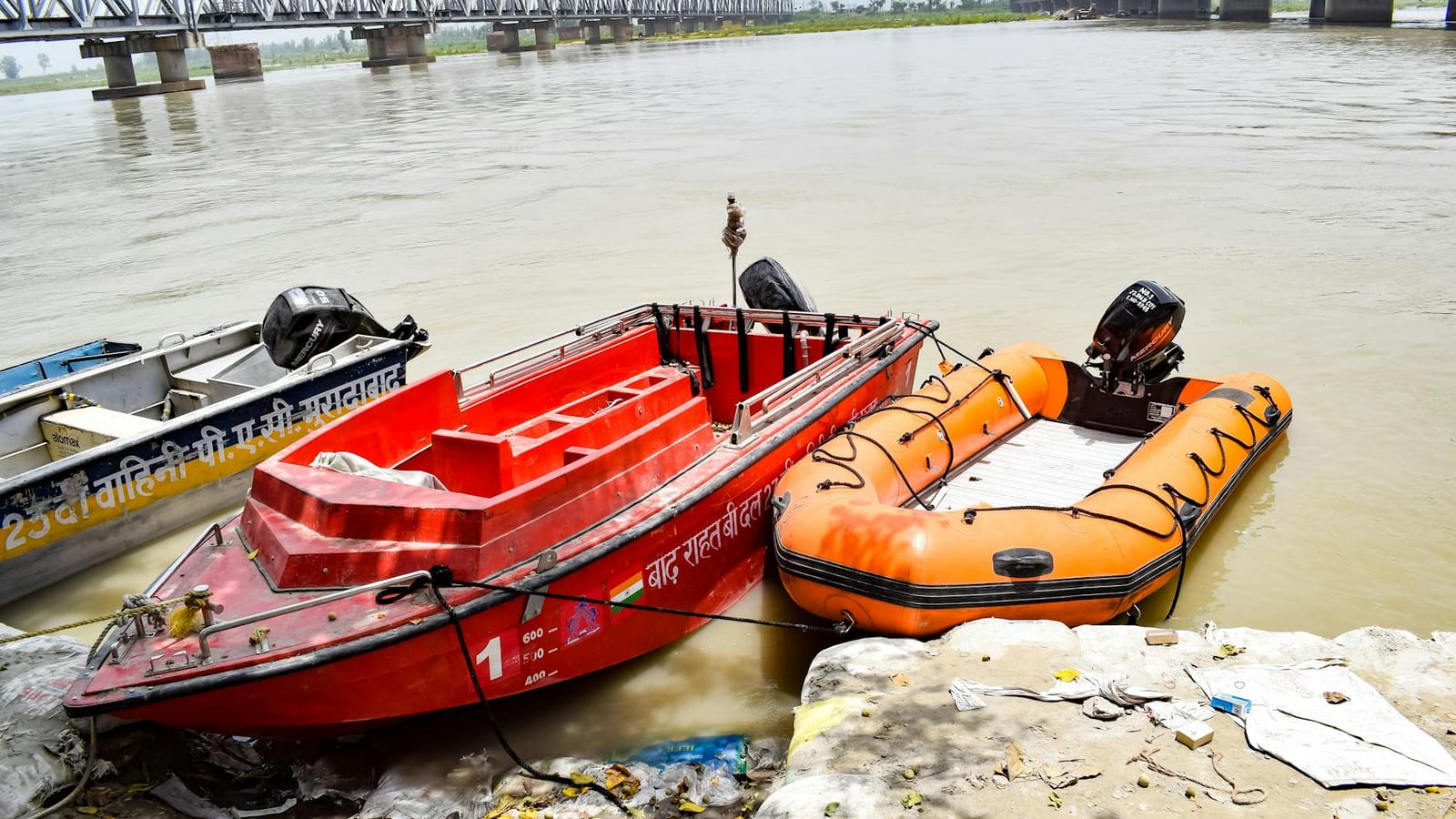
For nearly 26 years, three families in Punjab lived with one impossible question. Did their loved ones vanish, or were they somewhere waiting to be found?
The answer came from 32 feet below the water. A rusted Maruti Omni, almost eaten away by time, came up from the Bhakra Canal with bones, clothes, shoes, personal items, and a child’s school uniform inside.
That uniform broke the silence more than any document could. It told the families what police files and failed searches never could. The four people who left for home after a wedding on October 17, 2000, had never gone missing in the usual sense. They had died together, hidden in the canal all along.
A wedding return that never ended
The four victims were Munni Lal, Tej Ram, Surjit Singh, and Surjit’s eight-year-old son Kalu. They were returning from a wedding in Tej Ram’s newly bought Omni van when the vehicle is believed to have fallen into the canal.
Their village, Kotla, near Rupnagar, waited for them that night. Then it waited for days. Then years.
Families in such cases do not mourn in a straight line. They search first. Then they borrow. Then they sell what they own. Then they learn to live with a half-truth, because no body means no final farewell.
That is what happened here. The families hired private divers after official searches found nothing. They sold land. They took loans. They kept asking the same question long after most people had stopped asking with them.
Tej Ram had bought the van only about a month before the accident. His son Bhupinder, who was five at the time, later said his father had sold three kanals of land to buy it. The family then sold another five kanals to fund search operations.
That is the quiet financial ruin behind many tragedies. First comes the loss. Then comes the cost of proving the loss.
The canal kept its secret
The breakthrough came when local diver Kamalpreet Saini was searching the canal for another missing person. During that operation, he found the remains of a van deep under the water.
The vehicle sat around 32 feet below the surface. It had spent more than two decades in a strong current. Saini said the rear portion and roof had badly collapsed, likely because of the impact and long pressure from flowing water.
Pulling it out took nearly three hours. The job was dangerous, because the team had to attach chains and cables to a vehicle that could fall apart at any moment.
When the van finally came out, it carried the weight of 26 monsoons. Inside were human remains, clothes, shoes, household items, and the child’s school uniform.
For the families, these were not just objects. They were proof. They were memory. They were the first real answer after a lifetime of doubt.
Families paid with land and years
Munni Lal’s wife, Sita Devi, said the accident destroyed her family. She said Munni Lal’s parents died while grieving their son. The family also struggled because, without proof of death, they could not get a death certificate.
That one detail matters. In India, a missing person can leave a family trapped in paperwork. Insurance, inheritance, pensions, land records, bank accounts, and remarriage decisions can all get stuck.
For poor and lower middle-class families, this is not just a legal problem. It can decide whether children stay in school, whether land gets sold, and whether a small business survives.
Sita Devi said the family later sold its dairy shop because debt became too heavy. That happened five years after the disappearance. By then, the emotional wound had already become an economic one.
Bhupinder said he and his brother somehow studied up to Class 12 despite the hardship. That single line says plenty. Children in such homes grow up fast. They inherit grief before they understand money.
The van’s recovery also changed how the families could mourn. Photographs that had hung for years as memories could finally be garlanded after last rites. That may sound symbolic to an outsider, but in many Indian homes, it is everything.
Police joined after recovery
Kiratpur Sahib SHO Inspector Rahul Sharma said the families, with local divers, brought the van out themselves and then informed the police.
That detail will trouble many readers. Families who had already lost so much ended up doing much of the final recovery themselves.
There may be practical reasons. Canals are difficult, visibility is poor, and old search records often fade. But the larger question remains. How many such cases sit in files because families run out of money before the system runs out of patience?
Some bone fragments found in the clothes were later immersed according to religious rites. The families also held a collective ardas at Gurdwara Patalpuri Sahib in Rupnagar.
For them, the ceremony was not only about death. It was about ending a 26-year waiting room.
A tragedy beyond one family
This story is not a business story in the usual boardroom sense. There is no company result, no market cap, no deal value. Yet money runs through it like a second canal.
A van bought after selling land. More land sold to search for it. Private divers hired because families needed answers. A dairy shop sold under debt. Children educated under strain.
That is the economy of grief, and India knows it well.
When a breadwinner disappears, a household often loses income, credit, confidence, and legal certainty at once. A death certificate may look like a small document. In reality, it can unlock survival.
This is why missing-person cases need speed and seriousness. A delay does not only stretch sorrow. It can push families into debt and strip them of assets built over generations.
The recovery of the Omni gives these three families what the law and the canal denied them for years, closure. But it also leaves a harder question for the rest of us.
If a rusted van can sit 32 feet below a canal for nearly 26 years, how many families are still living between hope and mourning? For ordinary people, that is the real lesson. Systems must not wait for families to become poorer before they are finally believed.