Gold Prices Ease In India Despite US-Iran Tensions
Gold and silver rates softened in India on May 26 even as US-Iran tensions stayed high, giving jewellery buyers a small price breather.
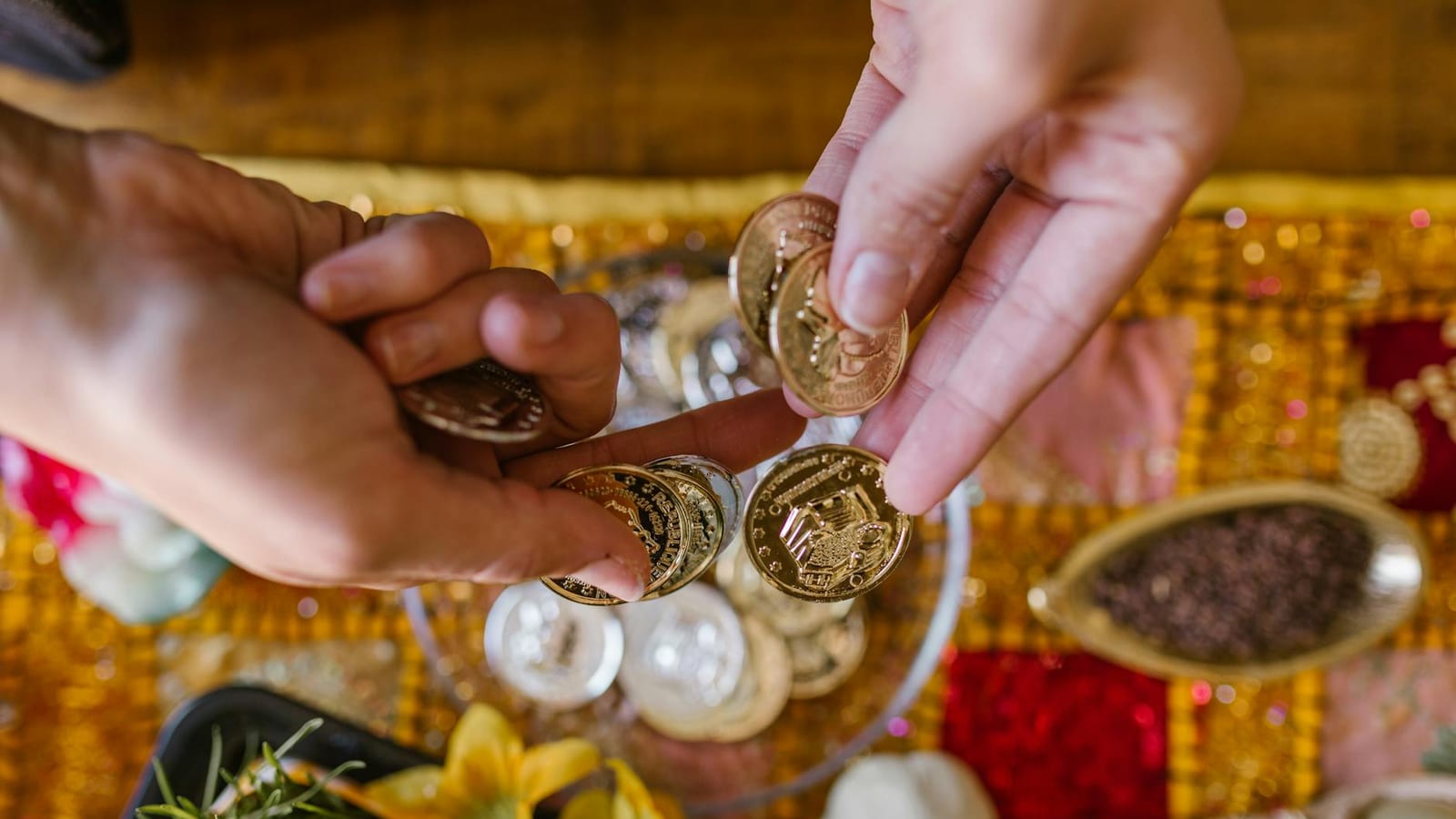
A wedding family that delayed its jewellery purchase by one week just got a small breather.
Gold and silver prices softened in India on May 26, 2026, even as global tension stayed high after the United States said it had attacked Iran in self-defence. Usually, such conflict pushes gold higher. This time, Indian retail prices moved lower.
That makes the day interesting for ordinary buyers. Not because gold has become cheap. It has not. But because even a small dip matters when 10 grams now costs more than many monthly salaries.
Gold slips despite war worries
The price of 24-carat gold fell by ₹490 for 10 grams on Tuesday. It stood at ₹1,58,890 for 10 grams. One gram of 24-carat gold fell by ₹49 to ₹15,889.
For 22-carat gold, the kind most Indian jewellery buyers usually track, the fall was also clear. One gram dropped by ₹45 to ₹14,565. Ten grams fell by ₹450 to ₹1,45,650.
These are not bargain-counter numbers. They are still very high prices by any normal household measure. But in gold, direction matters almost as much as the level.
A ₹450 or ₹490 fall may look small on paper. For a family buying 50 grams for a wedding, that saving can cross ₹2,000. For someone buying just a coin, it may simply feel like a better entry point.
That is how Indian gold buying works. People rarely buy only because prices fall. They buy because a wedding, festival, birth, or savings goal has arrived. A dip only decides the timing.
Silver also loses some shine
Silver also moved lower on the day. The price stood at ₹284.90 per gram. One kilogram of silver was priced at ₹2,84,900.
Silver has a different role in Indian homes. Gold is status, savings, and sentiment rolled into one. Silver is more practical. It appears in puja items, gifts, anklets, utensils, and small-ticket festive buying.
But silver is not just a household metal. Industry uses it in electronics, solar panels, medical equipment, and several manufacturing lines. That gives silver a split personality.
When industry demand looks strong, silver can rise even if jewellery demand slows. When financial markets get nervous, it can move with gold. On some days, it behaves like a precious metal. On others, it behaves like an industrial input.
For small buyers, the daily silver rate matters in a simpler way. A few rupees here and there can decide whether they buy a small gift now or wait.
For manufacturers and traders, the stakes are bigger. A jeweller holding inventory can see margins shift quickly. A silverware seller may have to change rates before customers even understand why.
Why conflict did not lift gold
The obvious question is this: if the United States and Iran are in a confrontation, why did gold fall?
Gold often rises when investors feel scared. Traders call it a safe haven. In plain English, people buy it when they do not trust the rest of the market.
But gold prices do not move on fear alone. They also react to the dollar, bond yields, central bank signals, oil prices, and local demand. In India, import costs and currency movement also matter.
That is why a global crisis does not always mean an immediate jump in domestic jewellery prices. The market may have already priced in some fear. Traders may book profit after a sharp rise. Local demand may also slow because buyers refuse to pay peak prices.
The tension around Hormuz adds another layer. The strait is one of the world’s most important oil routes. If trouble there worsens, crude oil prices can climb. That can hurt countries like India, which imports most of its oil.
Higher oil prices can weaken the rupee and feed inflation. A weaker rupee usually makes imported gold costlier. So, even if gold slips today, the risk has not gone away.
For Indian buyers, this is the tricky part. The price on the shop board may fall in the morning. But global news can change the mood by evening.
Buyers may wait and watch
India’s gold market has already been dealing with weak jewellery demand at high prices. Many families now split purchases. They buy a small piece now and postpone the larger purchase.
That is sensible, but it also changes the business for jewellers. Earlier, a wedding order could mean a large one-time purchase. Now, customers ask more questions. They compare rates across stores. They check making charges more carefully.
For a jeweller in a busy Bengaluru market, the problem is not only the gold rate. It is customer hesitation. When prices sit near record levels, even loyal customers pause.
The same applies to smaller towns. A family may still buy gold for a daughter’s wedding. But they may reduce the weight, choose simpler designs, or exchange old jewellery.
That affects the whole chain. Designers, artisans, goldsmiths, transporters, refiners, and retailers all depend on steady buying. When demand softens, the pain travels quietly through the trade.
Still, gold has a strange hold on Indian households. It is not just another asset. It is insurance, emotion, and social comfort. Many people trust it more than stocks, bonds, or digital investments.
That trust explains why dips attract attention, even when prices remain painfully high.
What shoppers should remember
For ordinary buyers, the first rule is simple. Do not treat one day’s fall as a trend. Gold can change direction quickly when global politics turns tense.
The second rule is to look beyond the headline rate. The final bill includes making charges, GST, wastage charges, and sometimes stone value. These can change the real cost far more than a small daily price drop.
Buyers should also check purity. A 24-carat rate does not mean a 22-carat ornament should cost the same. Jewellery buyers should ask for hallmarking and a clear invoice.
For investors, gold works best when it is part of a plan. Buying after every scary headline can become expensive. Buying in small amounts over time may suit many households better.
Silver needs even more care. Its price can swing sharply because industrial demand also drives it. That makes silver exciting on good days and harsh on bad ones.
The May 26 fall gives buyers a little room, not a full escape. Gold remains expensive, silver remains elevated, and global tension remains alive. For Indian households, the smartest move may be old-fashioned: buy only what you need, check the bill properly, and keep one eye on the world outside the jewellery shop.