Hezbollah Rockets Hit Haifa as Israel Strikes Lebanon
Hezbollah fired missiles near Haifa, prompting Israeli strikes on Lebanon and widening risks for ports, airlines, oil traders and households.
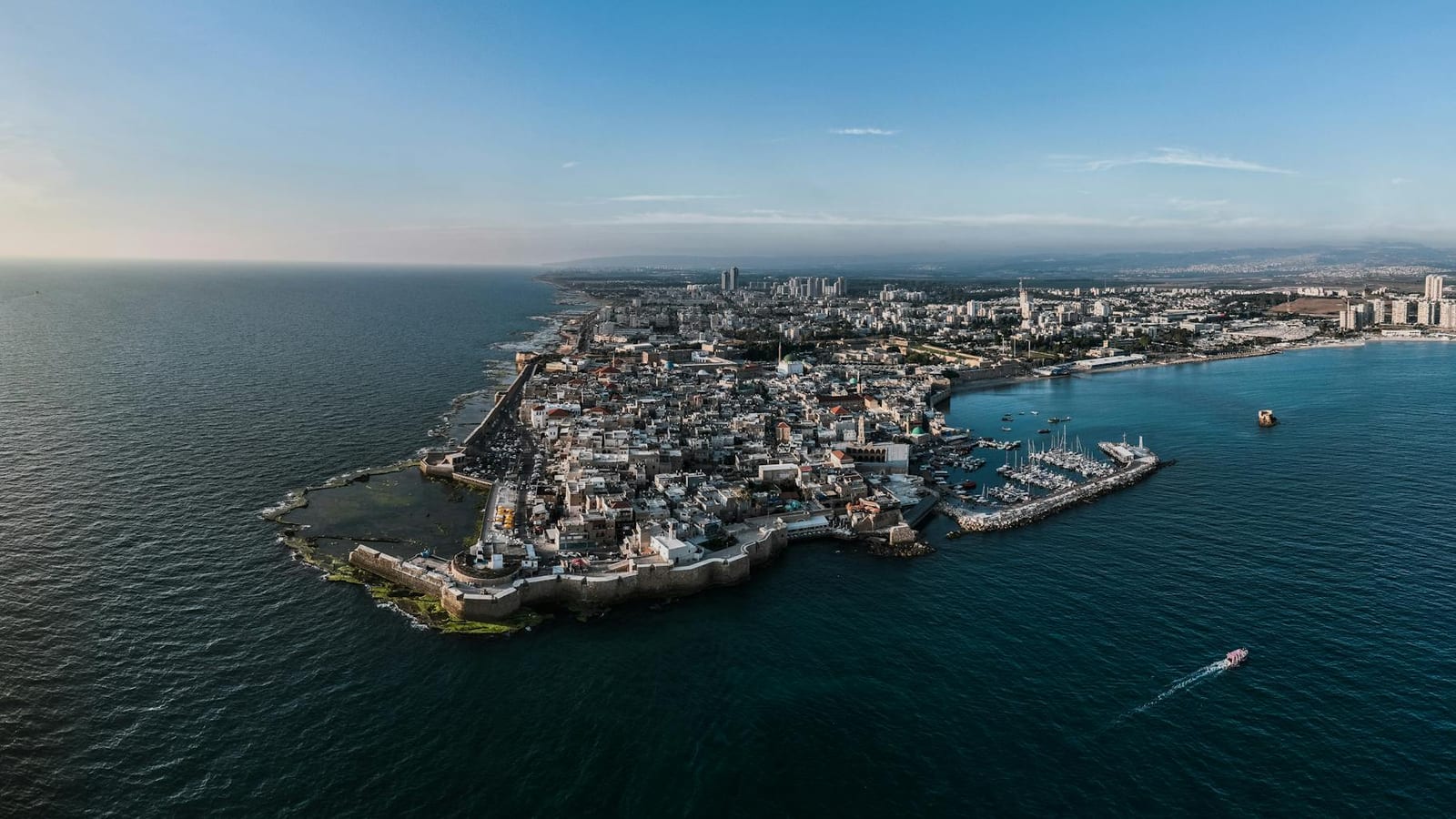
For families in Haifa, the evening warning siren is no longer just a sound. It is a reminder that the war next door can arrive in seconds.
Hezbollah said it fired 135 Fadi 1 missiles towards a military base south of Haifa on Monday. Israel answered within hours, saying its air force struck more than 120 Hezbollah targets in southern Lebanon in one hour.
That is the headline. The deeper story is more worrying. The Israel-Gaza war is no longer staying inside Gaza’s borders. It is pulling Lebanon, Iran-backed groups, ports, airlines, oil traders, insurers, and ordinary households into a wider zone of risk.
Haifa attack raises northern pressure
Hezbollah said Monday’s attack targeted a military base near Haifa, Israel’s third-largest city. The group described the rockets as Fadi 1 missiles.
The Israeli military said Israeli areas came under fire through the day. Reports from local authorities pointed to injuries in the Haifa region and southern Israel. Ten people were reported hurt around Haifa, while two others were injured further south.
Haifa matters for more than military reasons. It is a major port city and an industrial centre. When rockets reach this area, the risk is not only to soldiers or bases. It also touches shipping, factories, fuel storage, and workers who keep daily commerce running.
For an Indian reader, think of a major port city facing repeated air alerts. Even if trade does not stop fully, every delay becomes costly. Ships wait. Insurance costs rise. Drivers, loaders, port staff, and small suppliers lose time and money.
This is why markets watch such attacks closely. A rocket barrage is a security event first. But in West Asia, security quickly becomes an economic story.
Israel hits back in Lebanon
The Israeli military said its air force carried out a broad operation in southern Lebanon. It said more than 120 Hezbollah targets were hit within 60 minutes.
Israel has described these targets as militant infrastructure. Hezbollah, backed by Iran, has kept up attacks on Israel since the Gaza war began after Hamas’s October 7 assault last year.
Lebanese officials reported civilian casualties from Israeli air strikes in different areas. They said 11 people were killed and 17 injured in attacks from Sunday night into Monday.
Lebanon’s health ministry said six people died and 13 were injured in an Israeli strike on a residential building in Kayfoun village, in the Aley district of Mount Lebanon. Another strike killed five people and injured four others, officials said.
That is where the cold language of war reports fails. “Targets” and “strikes” sound clinical. On the ground, they mean broken buildings, closed roads, crowded hospitals, and families wondering where to sleep.
Lebanon is already under deep economic strain. Its currency has collapsed in recent years. Banks have restricted access to savings. Many young people have left for work abroad. A wider war would land on a society that has very little cushion left.
Iran’s message adds heat
Iran added a political layer to the fighting on Monday. Supreme Leader Ayatollah Ali Khamenei praised the October 7 Hamas attack as a turning point for Palestinians.
That attack last year killed about 1,200 people in Israel. More than 250 people were taken hostage. Israel then launched its military campaign in Gaza, where Hamas remains its main enemy.
Hezbollah is not Hamas, but the two are aligned in the wider anti-Israel camp. Hezbollah has built a strong military presence in Lebanon over many years. Iran has long supported the group.
This is why every Hezbollah attack carries a bigger question. Is it a limited pressure tactic, or another step towards a regional war?
For businesses, governments, and families, that question is not theoretical. Oil prices react to fears of wider conflict. Airlines change routes. Shipping firms review risk. Exporters and importers look again at delivery timelines.
India has a large stake in stability across West Asia. Millions of Indians work in the Gulf. Indian companies depend on energy imports. Families across Kerala, Telangana, Uttar Pradesh, Bihar, Punjab, and other states rely on remittances from the region.
A wider conflict would not need to reach India’s shores to pinch Indian homes. It could come through higher fuel prices, pricier freight, delayed cargo, or nervous financial markets.
Why India should watch closely
The immediate battlefield is Israel and Lebanon. But the economic map is much wider.
The eastern Mediterranean connects to shipping lanes, energy flows, telecom cables, aviation routes, and global insurance markets. When missiles fly near key cities and borders, every connected business starts calculating risk.
For Indian exporters, uncertainty is the hidden tax. A shipment of garments, auto parts, chemicals, or farm goods may still move. But the cost of moving it can rise. Insurance firms may charge more. Buyers may delay orders. Banks may ask sharper questions.
For consumers, the first sign often appears at the petrol pump or in airline fares. Crude oil prices move on fear as much as supply. If traders believe the conflict could spread, they price in danger early.
There is also the labour angle. Indian workers in West Asia usually watch such crises with two worries. They worry for their own safety. They also worry whether a regional shock could hurt jobs, wages, and transfers back home.
That human chain is easy to miss in military coverage. A missile over Haifa can eventually affect a family budget in Kochi or Lucknow. That is how connected this region has become.
The war’s wider business cost
Companies hate uncertainty more than bad news. Bad news can be priced. Uncertainty keeps changing shape.
The Israel-Hezbollah exchange creates exactly that kind of fog. Neither side appears ready to step back fully. Israel wants to weaken Hezbollah’s military reach. Hezbollah wants to show it can still hit deep enough to unsettle Israeli cities.
In between stand civilians and small businesses. A shopkeeper in northern Israel cannot plan normal working hours if sirens keep sounding. A family in Lebanon cannot treat home as safe if residential areas face air strikes.
Larger companies can shift routes, buy cover, or absorb delays. Small firms cannot do that so easily. A missed shipment can damage a supplier relationship. A closed road can ruin a day’s earnings. A cancelled flight can break a worker’s travel plan.
This is the uneven cost of conflict. The powerful make strategic calculations. The ordinary citizen pays in sleep, savings, and certainty.
The coming days will show whether this remains a controlled exchange or moves closer to open war. For India, the lesson is plain. West Asia is not a distant theatre on a map. It sits inside our fuel bills, our trade routes, our migrant networks, and our market mood. When Haifa hears sirens and Lebanon counts the dead, Indian households should understand that the shockwaves can travel quietly, and often through the monthly budget first.