Hema Malini Receives Dharmendra's Padma Vibhushan
President Droupadi Murmu conferred Dharmendra's posthumous Padma Vibhushan as Hema Malini accepted the honour at Rashtrapati Bhavan in Delhi.
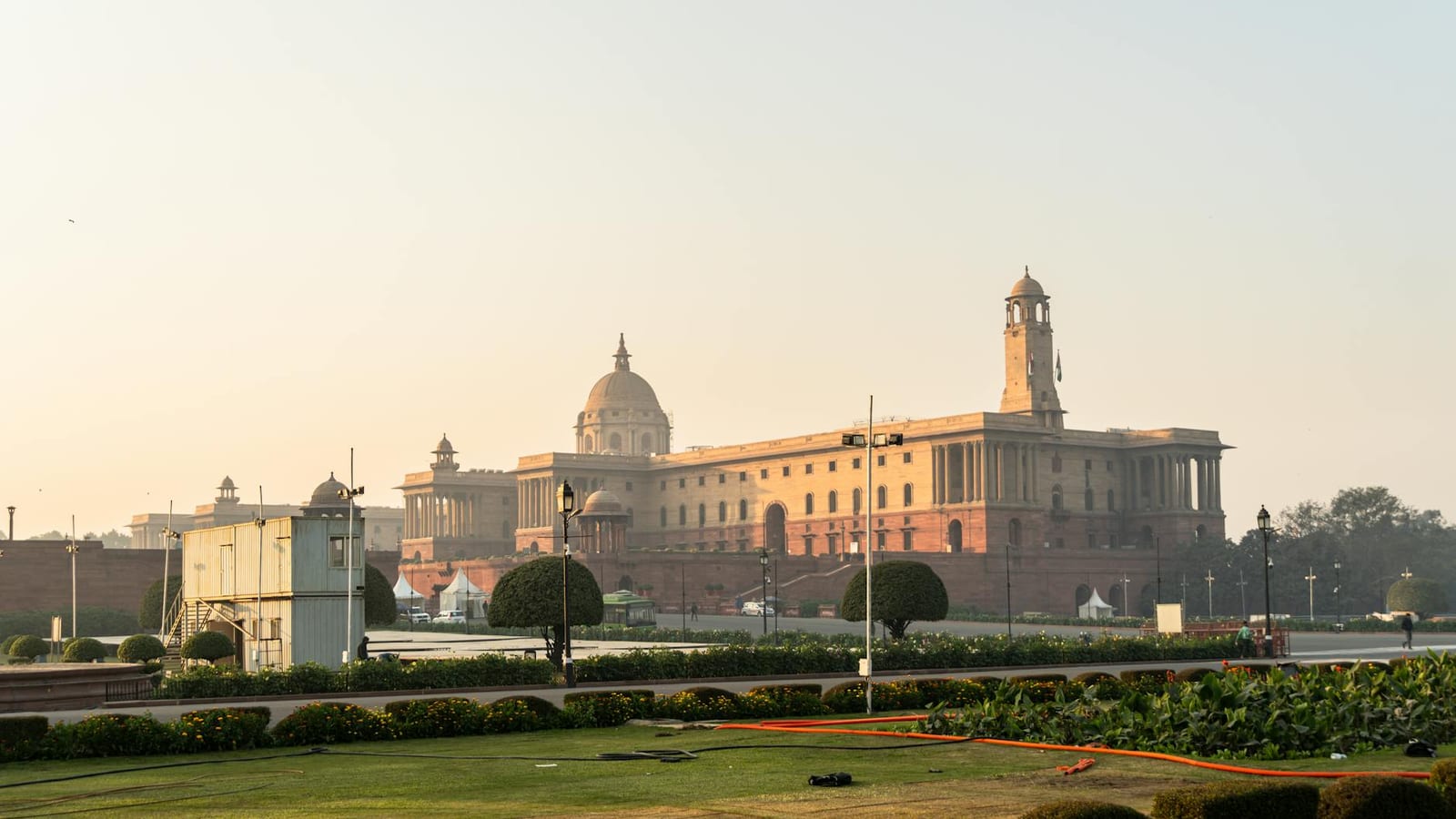
When Hema Malini walked up at Rashtrapati Bhavan, the applause carried more than ceremony. It carried six decades of Indian cinema memory.
She received the Padma Vibhushan on behalf of her late husband, Dharmendra, one of Hindi cinema’s most loved stars. Their daughter Ahana Deol, seated in the audience, broke down as his name was called.
That one moment said what official citations often cannot. Awards recognise service, but families carry the cost of that service.
Dharmendra’s final national honour
President Droupadi Murmu conferred the Padma Vibhushan on Dharmendra posthumously at a civil investiture ceremony in New Delhi.
The award recognised his exceptional contribution to the arts. In plain terms, it placed him among India’s highest civilian honourees.
For cinema lovers, Dharmendra was never just a film star. He was the man who made toughness look gentle, romance look easy, and mass appeal look natural.
His career helped shape the Hindi film hero for generations. Before today’s carefully managed star brands, Dharmendra built affection the old way, through repeat viewing, family audiences, and sheer screen warmth.
The posthumous honour also tells us something about how India remembers cinema. Popular film is no longer treated as light entertainment alone. It is part of national culture, memory, and soft power.
A ceremony full of memory
The ceremony took place at Rashtrapati Bhavan’s Ganatantra Mandap. Vice President C.P. Radhakrishnan, Prime Minister Narendra Modi, and Home Minister Amit Shah attended.
The President presented 66 awards during this round. These included two Padma Vibhushan, six Padma Bhushan, and 58 Padma Shri honours.
The government had announced 131 Padma awards around Republic Day. The remaining awardees will receive their honours in the next round.
Classical violinist N. Rajam also received the Padma Vibhushan at the ceremony. Her recognition brought the worlds of cinema and classical music into the same national frame.
That matters because Indian art rarely lives in neat boxes. Film music borrows from classical forms. Theatre feeds cinema. Advertising shapes popular taste. These fields keep talking to each other.
Another emotional moment came when Neeta Joshi accepted the Padma Bhushan on behalf of the late advertising leader Piyush Pandey. For many in media and marketing, Pandey changed how India spoke to itself in public.
Why Padma awards still matter
The Padma awards can look formal from a distance. Names are announced, citations are read, medals are given, photographs are taken.
But for families, colleagues, and fans, they carry a different meaning. They turn a lifetime of work into a public thank you.
The Padma Vibhushan is India’s second-highest civilian honour. It comes after the Bharat Ratna. The Padma Bhushan and Padma Shri follow in order.
These awards cover public service, art, literature, science, trade, medicine, social work, and more. They are meant to recognise achievement beyond routine success.
In entertainment, that distinction becomes important. Box office numbers fade. Streaming charts change every Friday. Public honour offers a longer view.
Dharmendra’s honour arrives at a time when the film industry is being judged in many new ways. Theatres compete with OTT platforms. Stars compete with algorithms. Regional cinema now speaks with national confidence.
Yet some figures remain above these shifts. Dharmendra belonged to that rare group. His name travelled across language, class, and age.
A young viewer may discover him through clips and reruns. An older viewer remembers packed single-screen theatres. Both recognise the same thing, an easy connect with the audience.
Kerala’s strong Padma presence
The Republic Day list also carried a strong Kerala presence. Five people were named for the Padma Vibhushan, and three of them were Malayalis.
Among the prominent names were former Kerala chief minister V.S. Achuthanandan, Justice K.T. Thomas, and writer P. Narayana Kurup.
In the Padma Bhushan list, actor Mammootty and SNDP Yogam general secretary Vellappally Natesan were among the 13 honourees.
That mix says something about how wide the Padma canvas has become. It covers politics, law, literature, cinema, social work, and community leadership.
For the entertainment industry, Mammootty’s honour also underlines a larger truth. Regional cinema is no longer regional in impact.
Malayalam cinema has spent years building respect through strong writing, controlled budgets, and actor-led storytelling. Its influence now stretches far beyond Kerala.
Hindi cinema still has scale. But the creative conversation has become more federal. A great performance from Kochi, Hyderabad, Chennai, or Kolkata can now travel across India faster than ever.
That is why the presence of figures like Prosenjit Chatterjee, who received the Padma Shri, also matters. Bengali cinema, like Malayalam cinema, has carried both artistic weight and popular memory.
The industry behind the emotion
Ceremonies like this are emotional, but they also reveal the business of Indian entertainment. Legacy has value. Not only in awards, but in platforms, catalogues, remakes, documentaries, and family-led estates.
Dharmendra’s films continue to live through television reruns, streaming libraries, music rights, and social media rediscovery. For producers and platforms, old stars still bring trust.
That trust is hard to manufacture. Modern publicity can create visibility. It cannot always create affection.
This is where the industry watches closely. A star’s long-term value now depends on memory as much as opening weekend numbers.
Families also become custodians of that memory. When Hema Malini accepted the award, she was not just receiving a medal. She was standing in for a life shared with public imagination.
Ahana Deol’s reaction made the moment less official and more human. Behind every national honour, there is usually a private grief, a long illness, an empty chair, or a family learning to smile for the cameras.
For ordinary readers, that may be the real takeaway. Fame can look distant, but recognition often returns to something simple. Work done over years, people moved by it, and a country pausing to say it mattered.
As India’s entertainment industry grows louder and faster, this ceremony offered a quieter reminder. The careers that last are not built only on hits. They are built on memory, trust, and the strange, lasting bond between an artist and the audience.