Ajmera Realty profit jumps 141% as revenue surges
Ajmera Realty shares rose nearly 10% after Q4 net profit climbed 141% to Rs 58.5 crore, as Mumbai housing demand held firm.
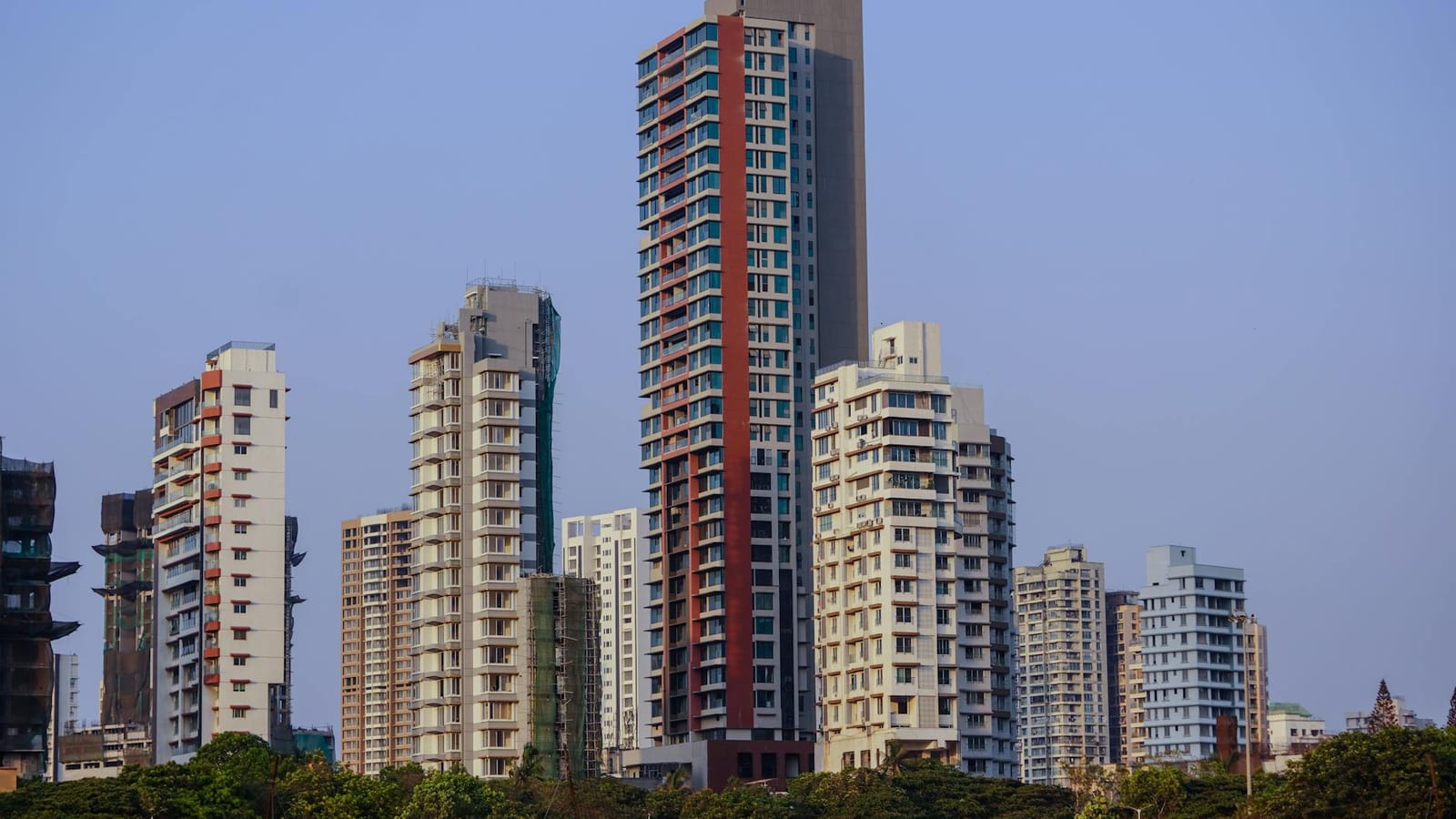
A 10 percent jump in a real estate stock can look like market excitement. But for homebuyers and small investors, Ajmera Realty’s latest numbers say something simpler: Mumbai’s housing market is still finding buyers, even at high prices.
Shares of Ajmera Realty & Infra India ended Monday, May 25, at ₹131.37, up 9.6 percent, after the company reported a sharp rise in March quarter profit and revenue. For someone holding ₹1 lakh worth of the stock before the move, the day’s gain was roughly ₹9,600 on paper.
The bigger story sits beyond one trading session. The company sold fewer square feet in the quarter, yet made more money. That tells us a lot about where urban housing demand is going.
Profit jumps despite lower area sold
Ajmera Realty reported revenue from operations of ₹433.9 crore for the March quarter of FY26. That was up 182 percent from ₹153.7 crore a year earlier.
Net profit rose 141 percent to ₹58.5 crore, compared with ₹24.2 crore in the same quarter last year. Earnings per share moved up to ₹2.8 from ₹1.3.
Those are strong headline numbers. But the more interesting detail is operational.
The company sold 104,742 square feet of carpet area during the quarter. That was 44 percent lower than last year. Yet the sales value rose 8 percent to ₹270 crore.
In plain English, Ajmera sold less space but earned more value from what it sold. That usually points to better pricing, a richer project mix, or stronger demand in higher-ticket locations.
For a homebuyer, this is not abstract. It means developers still have room to hold prices in parts of the market. Discounts may exist, but they are not driving the story here.
Collections become the real signal
In real estate, sales announcements make noise. Collections tell the real story.
Ajmera Realty said collections in the March quarter jumped 74 percent to ₹316 crore. For the full year, collections rose 71 percent to ₹1,103 crore.
That matters because real estate companies do not live only on bookings. They need cash to come in from buyers as construction moves ahead. Better collections mean fewer delays, cleaner cash flow, and less pressure to borrow heavily.
Dhaval Ajmera, Director, Corporate Affairs, said the company’s collection efficiency improved to 65 percent from 60 percent in FY25. He also said this helped the company bring its debt-to-equity ratio down to 0.53 times.
Debt-to-equity sounds technical, but the idea is simple. It shows how much debt a company carries compared with shareholder money. A lower number usually means a company has more breathing room.
Ajmera had earlier guided for 0.85 times. So 0.53 times gives it a stronger balance sheet than expected.
For retail investors, this is worth watching closely. Many real estate stocks rise during housing upcycles. But the ones with better collections and controlled debt usually handle slowdowns better.
FY26 gives the company momentum
For the full financial year FY26, Ajmera Realty reported revenue of ₹1,098 crore. That was 46 percent higher than ₹753.1 crore in FY25.
Its EBITDA rose 25 percent to ₹306 crore. EBITDA is profit before interest, tax, depreciation, and amortisation. Think of it as a rough measure of business profit before some accounting and financing costs.
Net profit for FY26 stood at ₹157.1 crore, up 24 percent from ₹126.4 crore in the previous year. Earnings per share improved 12 percent to ₹7.6.
The company also said it achieved its highest-ever annual sales and collections. Sales value rose 57 percent to ₹1,701 crore. Carpet area sold during the year rose 11 percent to 660,246 square feet.
New launches contributed 82 percent of total sales value. That is a key clue.
A real estate company can report strong numbers from older inventory for some time. But new launches show whether buyers are still turning up today. In Ajmera’s case, new projects carried most of the year’s sales value.
This is why the market reacted sharply. Investors were not just looking at last quarter’s profit. They were also reading the pipeline and cash collection trend.
FY27 target raises expectations
Ajmera Realty has now set a pre-sales target of ₹2,200 crore for FY27. Pre-sales are bookings made before final delivery. Developers track this number closely because it shows demand for their upcoming and ongoing projects.
The target is ambitious because FY26 already gave the company a high base. To grow from ₹1,701 crore in sales value to ₹2,200 crore, Ajmera must keep launching, selling, and collecting well.
The company also said it added five asset-light projects with an estimated gross development value of ₹2,433 crore. Gross development value is the expected revenue from a project over its life.
Asset-light projects usually mean the developer does not lock up as much money in land ownership. Instead, it may work through development agreements or joint arrangements. This can help a company grow faster without loading too much debt.
But it also demands tight execution. Approvals, construction timelines, pricing, and partner agreements all matter.
For India’s listed real estate firms, investors have become less patient about vague land banks. They now want visible launches, faster sales, and steady collections. Ajmera’s FY27 target will face that test quarter by quarter.
Dividend adds a small sweetener
Along with the results, Ajmera Realty’s board recommended a final dividend of Re 1 per equity share for FY26. The dividend still needs shareholder approval at the company’s Annual General Meeting.
The share has a face value of ₹2. If approved, the dividend will be paid within 30 days of the AGM.
For most investors, the dividend is not the main attraction here. At Monday’s closing price, Re 1 per share is a modest cash payout.
The larger question is whether Ajmera can keep converting demand into cash without stretching its balance sheet. That is where the real value debate sits.
The real estate cycle in India still looks supportive in many urban markets. Salaried buyers continue to stretch for homes, families upgrade after years of delay, and developers with branded projects enjoy stronger pricing power.
But the pressure points are real too. Home loan rates remain a big monthly burden. A small rise in property prices can change the EMI calculation for a young family very quickly.
That is why Ajmera Realty’s numbers deserve both attention and caution. The company has delivered a strong FY26, the stock has cheered it, and the FY27 target shows confidence. Now the market will ask a sharper question: can this growth continue without making homes even harder to afford for the very buyers driving the boom?