Eight Textile Stocks Get Motilal Oswal Buy Spotlight
Motilal Oswal sees improving demand, capacity use and trade deals lifting select textile exporters including Gokaldas Exports and Arvind.
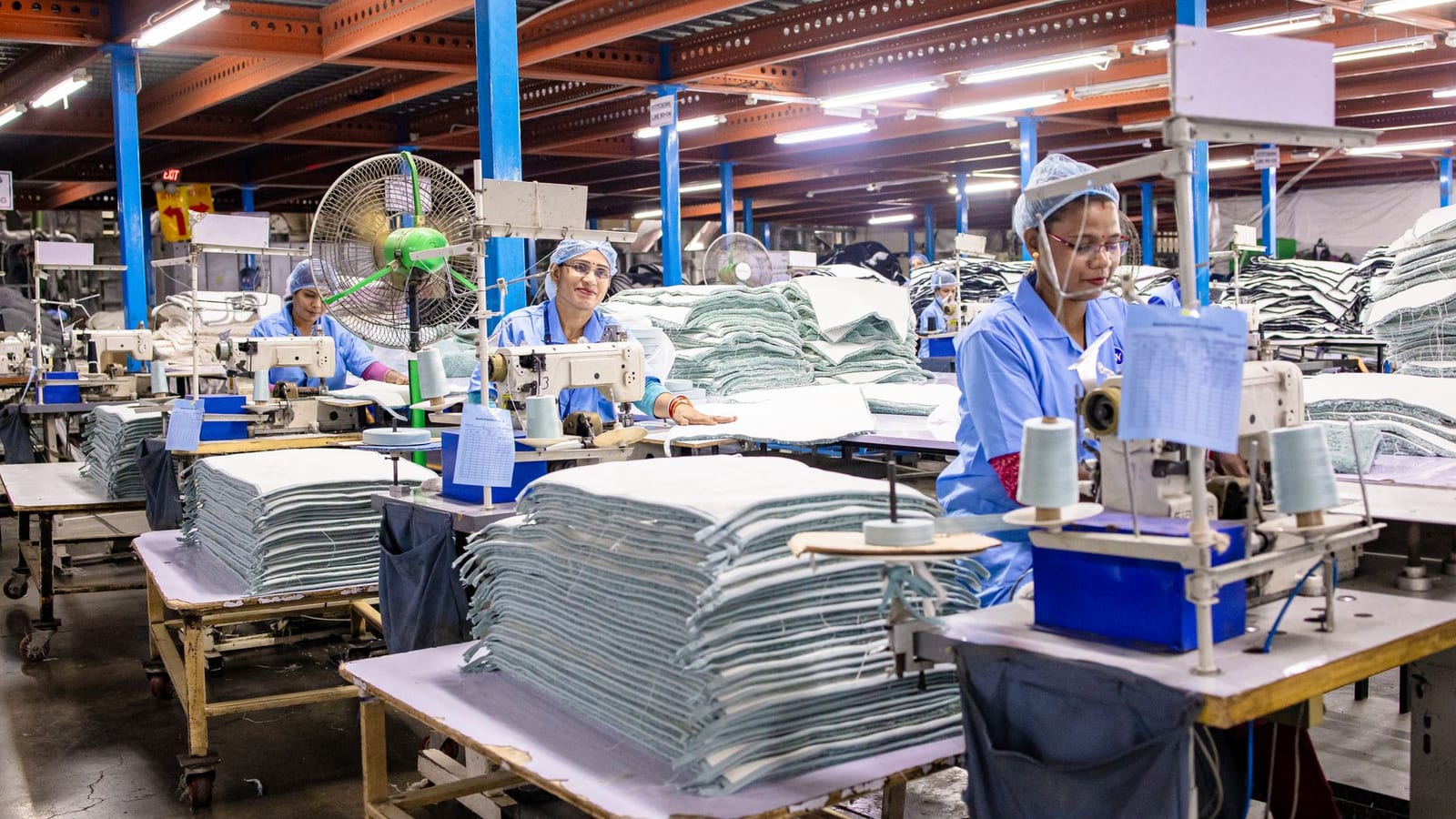
A 39 percent upside call in textiles is not just about stock tickers. It is about whether India can finally stitch itself a bigger place in global clothing supply chains.
Motilal Oswal has started coverage on eight textile and apparel companies. It sees demand improving slowly, factories filling up better, and trade deals opening doors.
For retail investors, the message is simple. The textile trade has been dull for a while. Now, some large Indian exporters may be entering a cleaner growth cycle.
Textile stocks return to focus
The brokerage has given buy ratings to Gokaldas Exports, Arvind, Pearl Global Industries, Indo Count Industries and Welspun Living.
It has kept KPR Mill, Trident and Vardhman Textiles at neutral. That means it sees business potential, but not enough cheapness in the stock price.
Gokaldas gets a target price of Rs 1,110. Motilal Oswal expects the company to gain from fresh capacity in India and better use of its Africa operations.
For Arvind, the target price is Rs 670. The brokerage believes the company can move beyond fabric and grow deeper in garments.
Pearl Global has a target price of Rs 2,300. Its edge comes from factories across India, Bangladesh, Vietnam and Indonesia.
Indo Count has been assigned Rs 550. Welspun Living gets Rs 200. Both are tied to the home textile story, where bed linen, utility bedding and exports matter.
Why global demand matters
Textiles depend heavily on overseas buyers. When American or European shoppers buy fewer clothes, Indian exporters feel it quickly.
That slowdown hit the sector over the last few years. Global brands had excess inventory, inflation hurt spending, and retailers avoided large fresh orders.
Motilal Oswal now expects a gradual recovery in global textile and apparel trade. Inventory levels have started looking more normal.
Easing inflation can also help. If families abroad spend less on fuel and food, they may spend more on clothing and home products.
This matters for Indian investors because export-heavy stocks often move before the broader economy shows comfort. Markets try to price tomorrow, not yesterday.
But investors should not confuse a recovery call with a free pass. Textile earnings can swing hard when currencies, freight costs or cotton prices change.
Trade deals could shift orders
One big hope comes from lower tariffs. A tariff is simply a tax on imports.
If Indian goods face lower duties in key markets, they become cheaper for foreign retailers. That can help exporters win more orders.
Motilal Oswal sees possible gains from free trade agreements with the UK and the European Union. These deals could help home textile and apparel exporters.
Welspun Living may benefit from this in home textiles. Indo Count could gain from bedding and domestic bed linen growth.
The brokerage also mentioned the RoSCTL scheme. In plain English, it refunds certain taxes and levies paid by exporters.
Such refunds matter in a low-margin business. A few percentage points can decide whether an order comes to India or moves elsewhere.
There is another global angle. Restrictions linked to Chinese cotton exports to the US have pushed brands to look at other sourcing hubs.
India fits that search in some ways. It has cotton, spinning capacity, large exporters and relatively low labour costs.
Yet India still has old problems. Power costs, logistics delays and smaller fragmented suppliers can hurt consistency.
That is why large, compliant exporters stand out. Big brands want suppliers who pass audits, deliver on time and avoid reputational trouble.
Bigger players may gain share
Motilal Oswal points to a fragmented exporter base in India. The top few apparel exporters still hold limited share.
In apparel, the top four to five players account for about 15 percent of export sales. In home textiles, they account for about 28 percent.
That leaves room for consolidation. In simple terms, bigger and better-run companies can grab business from smaller rivals.
This is where investors need to separate stories from numbers. A company can talk about exports, but capacity use and margins reveal the truth.
The brokerage expects strong growth in some names between FY26 and FY28. Gokaldas, for example, could see adjusted profit after tax grow at a sharp pace.
Indo Count and Welspun also carry high profit growth estimates. That partly reflects a low base and operating improvement.
EBITDA, often used in these reports, means profit before interest, tax, depreciation and amortisation. Think of it as a rough measure of operating performance.
For a retail investor, the more useful question is simpler. Can the company sell more without letting costs eat the gains?
That will decide whether target prices become real wealth, or just neat spreadsheet optimism.
Neutral calls deserve attention
KPR Mill, Trident and Vardhman Textiles have neutral ratings. Their target prices stand at Rs 1,200, Rs 28 and Rs 700, respectively.
Neutral does not mean bad business. It usually means the stock price already reflects much of the good news.
That distinction matters in markets. A fine company can still be an average investment if bought too expensively.
Textiles also carry risks that headlines often hide. Cotton prices can rise suddenly. The rupee can move sharply. Overseas demand can weaken again.
A stronger rupee may hurt exporters because foreign earnings convert into fewer rupees. A weaker rupee can help, but it may raise imported input costs.
Young investors chasing sector themes should remember this. Textile stocks can rally quickly, but they can also punish late entries.
The better approach is to track order books, margin trends and debt. Expansion funded badly can hurt shareholders later.
For India, the larger question goes beyond these eight stocks. If trade deals move, and global brands diversify from China, Indian exporters have a real opening. But the winners will be those who execute quietly, not those with the loudest growth story. For ordinary investors, the textile bet is not only about upside. It is about patience, price discipline and knowing that every shirt on a global shelf begins with a very demanding supply chain.