Harikanta Overseas IPO Sees Tepid Demand on Day 4
Harikanta Overseas IPO was subscribed 0.56 times by Monday evening, with QIB demand strong but retail appetite cautious before the 27 May close.
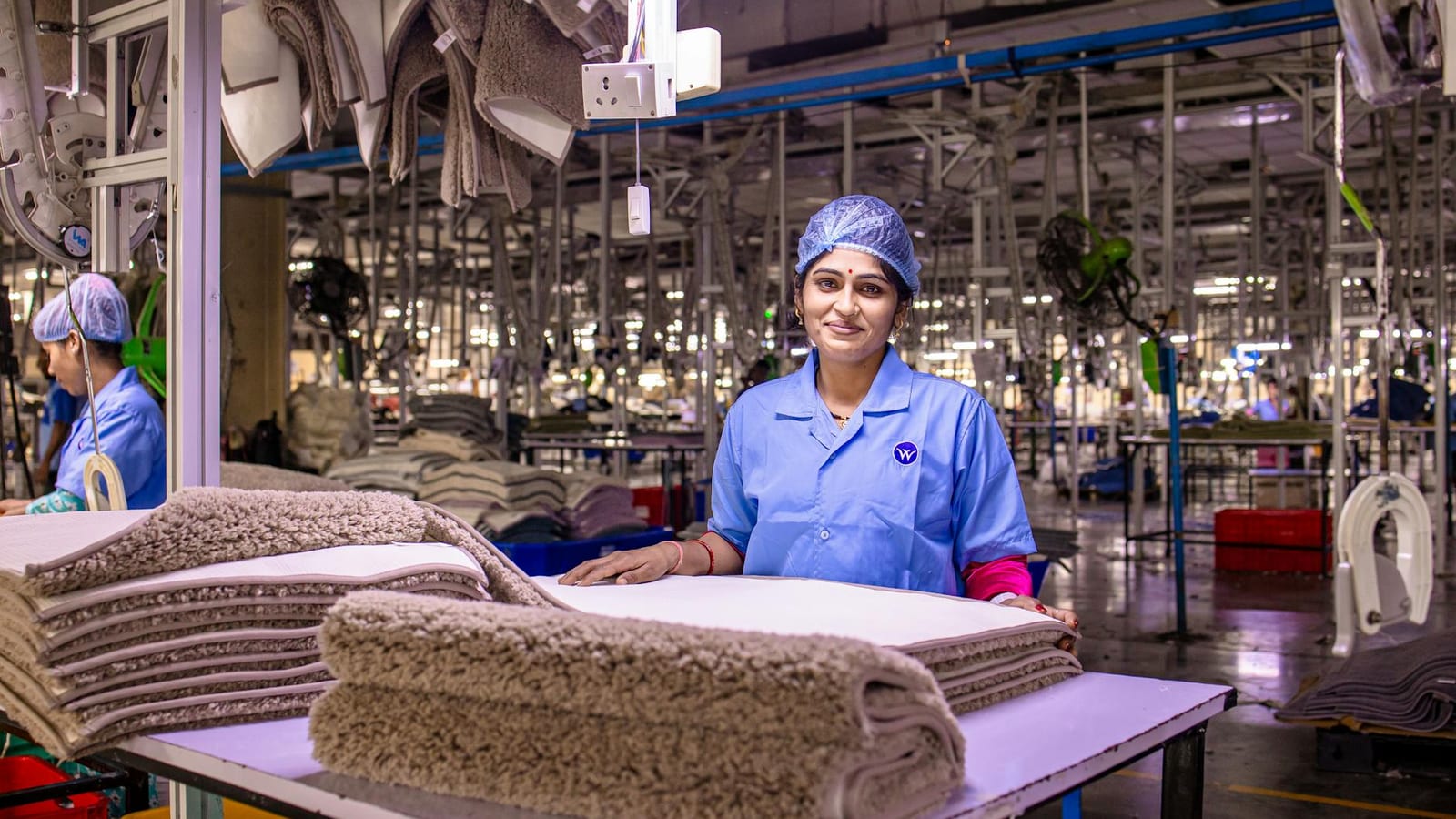
A small textile company from Surat is asking investors for ₹24.30 crore, and the market is answering with caution.
By Monday evening, 25 May, the Harikanta Overseas IPO had received bids for just over half the shares on offer. That is not a disaster. But in India’s noisy SME IPO market, where some issues get chased wildly, it is a clear sign of selective appetite.
For retail investors, this is the kind of offer that needs a calm reading. The price looks small at ₹86 to ₹91 a share. The total issue size also looks modest. But small does not automatically mean cheap, and an SME listing can move sharply both ways.
Harikanta Overseas IPO sees slow demand
The Harikanta Overseas IPO opened on 20 May and will close on 27 May. By 4.30 pm on the fourth day, the issue had been subscribed 0.56 times.
In plain English, investors had bid for 14.94 lakh shares against 26.70 lakh shares available. So, more than four days into bidding, the company had not yet crossed full subscription.
The strongest demand came from qualified institutional buyers. That portion was subscribed 11.18 times. These are larger investors such as funds, banks, and other institutions.
The retail portion, however, was subscribed only 0.34 times. The non-institutional investor portion also stood at 0.34 times. This group usually includes wealthy individuals and smaller investment firms.
That split tells its own story. Institutions seem willing to take a closer look. Retail investors, at least so far, are not rushing in.
This matters because SME IPOs often depend on sentiment. If retail investors feel there is quick listing money, they crowd in. If the grey market looks flat, they often wait.
Fresh issue means company gets funds
The IPO is worth ₹24.30 crore and is entirely a fresh issue. Harikanta Overseas will issue 0.27 crore new shares.
There is no offer-for-sale component. That means existing shareholders are not selling their stake through this IPO. The money raised will go to the company.
That is usually a better signal than an issue where promoters mainly cash out. Here, the company says it will use the funds for factory premises, machinery, working capital, and general corporate needs.
Let us break that down. Factory premises and machinery mean the company wants to expand or improve production. Working capital means money needed for daily business, such as buying raw material, paying suppliers, and managing orders.
For a textile firm, working capital can be a real pressure point. Fabric businesses often buy inputs before they get paid by customers. If payments stretch, cash gets stuck.
That is why investors should not look only at the IPO size. They should ask whether the company can turn this money into higher sales and better margins.
The issue price band is ₹86 to ₹91 per share. At the top end, investors are valuing a small manufacturing business that still has to prove its scale in public markets.
Surat textile business goes public
Surat is not just a city in this story. It is the engine behind it.
Harikanta Overseas operates from Sai Ram Industrial Estate-2 in Bamroli, Surat. Its production facility covers 953.93 square metres.
The company started in 2018 and works in synthetic textile fabrics. Its product list includes Ikat fabrics, polyester garment fabrics, saree fabrics, dhupion fabrics, poly linen, and natural fibre fabrics.
Most of its products serve the women’s wear market. These fabrics go into sarees, dress materials, and kurtas. The company also supplies fabric used in men’s kurtas.
This makes the business closely linked to India’s clothing cycle. Festival demand, wedding shopping, exports, and fashion trends can all affect orders.
A small manufacturer in this segment can grow quickly if it finds steady buyers. But the same business can also face pressure from raw material prices, delayed payments, and competition from larger textile hubs.
Harikanta Overseas sells in Indian markets such as Delhi, Bangalore, Karnataka, Maharashtra, Uttar Pradesh, Punjab, and Rajasthan. It also exports to Bahrain, Singapore, and Thailand.
Exports add opportunity, but they also add currency and demand risks. If global buyers slow orders, smaller firms can feel the pinch faster.
Grey market gives no excitement
The grey market premium for the Harikanta Overseas IPO is currently nil. In simple terms, unofficial market trackers show no premium over the issue price.
If shares are priced at ₹91 and the grey market premium is zero, traders are not indicating any listing gain right now. That points to a possible flat listing.
Investors should treat grey market premium with care. It is unofficial and can change quickly. It also does not guarantee the actual listing price.
Still, GMP influences retail behaviour. Many investors in SME IPOs use it as a shortcut. A high premium attracts quick money. A weak premium forces people to look harder at the business.
The company’s shares are expected to list on BSE SME on 2 June. SME listings can be less liquid than mainboard stocks. That means investors may not always find easy buyers or sellers at their preferred price.
This is where retail investors need discipline. A ₹91 share can still be risky if the market depth is thin. A small lot size can also lock up more money than casual investors expect.
The bigger question is not whether Harikanta Overseas lists at a small gain or flat. The question is whether it can use IPO money to expand without weakening its finances.
India’s IPO market has become more mature, but also more crowded. Investors now see dozens of small companies asking for public money. Some deserve attention. Some only ride the mood.
Harikanta Overseas sits in a familiar Indian business lane: a young manufacturer from a trading-heavy city, looking for growth capital, serving both local and export markets. That story has promise, but it also needs patience.
For ordinary investors, the lesson is simple. Do not buy an SME IPO only because the ticket size looks manageable. Read the use of funds, check demand across investor categories, and understand liquidity after listing.
A flat grey market premium is not a final verdict. But it is a useful warning light. It asks investors to slow down, look beyond listing-day hopes, and decide whether this textile business deserves a place in their portfolio after the first day’s noise fades.