Sensex Slide Puts June Market Open Under Pressure
Indian shares face a cautious Monday start after Sensex and Nifty fell sharply, with oil, geopolitics, FPI flows and RBI signals in focus.
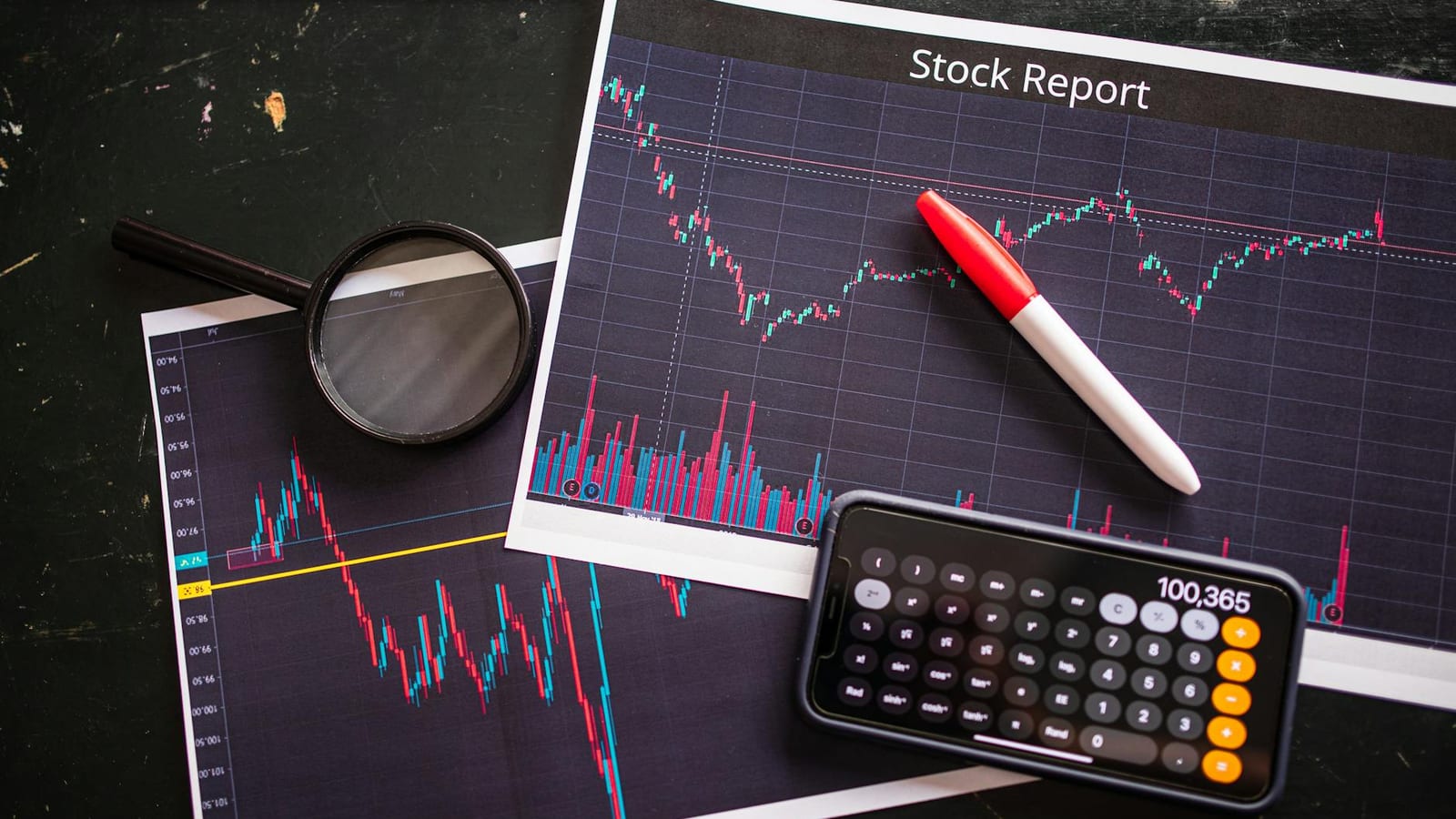
Friday’s last-hour selloff has left many retail investors staring at a simple question today: was that a one-day scare, or the start of a rougher June?
The Bombay Stock Exchange’s Sensex fell 1,092 points on Friday, a 1.44 percent drop. For someone holding a ₹5 lakh equity portfolio that moved like the index, that is roughly ₹7,200 gone in one session.
The National Stock Exchange’s Nifty 50 also slipped 359 points, or 1.5 percent, to close at 23,547.75. Monday’s opening now depends less on one local trigger, and more on a messy mix of oil, global politics, foreign selling, and the RBI’s next move.
Global cues look mixed
Gift Nifty pointed to a soft start for Indian shares on Monday. It traded around 23,700, slightly below the previous Nifty futures close.
That does not mean the day is lost before it begins. But it does tell traders that the market may open with caution, not confidence.
Asian markets gave no clean signal either. Japan’s Nikkei 225 moved higher, while the Topix slipped. South Korea’s Kospi jumped, but the Kosdaq fell sharply.
Wall Street, strangely enough, looked much healthier. The S&P 500 ended at a record closing high last week and posted its ninth straight weekly gain.
The Nasdaq also rose for the week, helped by technology stocks. Microsoft gained strongly, Dell surged, while Nvidia, Apple, Amazon, Alphabet, and Tesla slipped.
For Indian investors, this contrast matters. America’s tech rally can lift sentiment, but India is facing its own worries. Foreign investors are selling, oil is rising, and traders are waiting for policy signals at home.
Oil and geopolitics return
The big worry is crude oil. Brent crude rose 2.37 percent to $93.28 a barrel, while US crude gained 2.71 percent to $89.73.
That is not just a number for traders. Costlier oil can weaken the rupee, raise import bills, and keep petrol, diesel, freight, and airline costs under pressure.
India imports most of its crude oil. So when oil rises, the stress travels from global markets to household budgets in small steps.
The trigger came from West Asia. The US and Iran exchanged messages over a possible ceasefire extension and the reopening of the Strait of Hormuz, but progress looked unclear.
At the same time, Israel expanded ground operations in Lebanon against Hezbollah. That raised fears that shipping and energy markets could face more disruption.
The Strait of Hormuz is a narrow sea route, but its importance is huge. A large part of the world’s oil trade passes through it.
If shipping there slows, oil traders react fast. Indian markets react too, because expensive crude can disturb inflation, the rupee, corporate margins, and government finances.
Foreign investors keep selling
Foreign Portfolio Investors sold Indian equities worth ₹32,963 crore in May, based on NSDL data. In the first five months of 2026, their total outflow touched ₹2,24,932 crore.
That is serious money leaving the market. It does not mean India’s long-term story has broken. But it does mean the market has less cushion when bad news arrives.
Domestic investors have helped absorb some of this pressure. SIP flows and local liquidity remain strong, especially in parts of the midcap and smallcap space.
Siddhartha Khemka of Motilal Oswal Financial Services said benchmark indices may stay range-bound. He also said some midcap and smallcap stocks could still outperform due to earnings and domestic money.
That sounds comforting, but investors should read it carefully. Range-bound means the index may struggle to break higher. Outperformance in smaller stocks also comes with sharper falls when sentiment turns.
For a young investor buying through mutual funds, this is not a reason to panic. But it is a reason to stop treating every dip as a guaranteed bargain.
Markets can stay expensive and weak at the same time. That is the uncomfortable bit many retail investors learn only during volatile months.
RBI week adds another layer
The RBI policy decision will be one of the biggest local events this week. Investors will watch what the central bank says on inflation, growth, liquidity, and interest rates.
For households, the RBI matters in very direct ways. A change in rates can affect home loan EMIs, fixed deposit returns, and borrowing costs for businesses.
Even if the RBI does not change rates, its language can move markets. Traders will scan every sentence for clues on future policy.
The rupee also remains in focus. The dollar index was flat near 99, while the yen weakened to 159.41 per dollar.
A weaker rupee can help some exporters, but it makes imports costlier. For India, that becomes painful when crude oil is already expensive.
India and the US are also set to begin trade talks in Delhi from June 1 to June 4. US Ambassador Sergio Gor said earlier that negotiations had reached their final stretch.
An interim trade agreement could help sentiment if it reduces uncertainty for exporters. But markets will wait for actual details, not diplomatic warmth.
Charts warn of weakness
Technical analysts are also sounding cautious after Friday’s fall. The Sensex slipped below important moving averages, which traders use to judge short-term strength.
Amol Athawale of Kotak Securities said the weak tone may continue if the Sensex stays below 75,300. He sees downside levels near 74,100, 73,800, and possibly lower if selling deepens.
For the Nifty 50, analysts are watching the 23,250 to 23,300 zone. If that breaks, the index could move toward 23,000.
On the upside, 23,800 to 24,000 has become a key resistance area. In plain English, that means sellers may return when the index rises near those levels.
Bank Nifty also ended lower on Friday, falling 614 points to 54,239.20. Banking stocks matter because they often show how investors view credit growth and domestic demand.
If banks remain weak, the broader market usually finds it harder to rally. If they stabilise, the index gets breathing room.
Gold, meanwhile, traded flat near $4,535 an ounce. That is interesting because gold usually attracts buyers during fear. Its muted move suggests investors are worried, but not rushing fully into safety.
For ordinary investors, Monday’s lesson is simple. The market is not moving on one headline anymore. It is juggling oil, war risk, foreign selling, RBI policy, trade talks, and stretched valuations.
The next few sessions may test patience more than intelligence. Long-term investors do not need to react to every tick. But they should know what they own, why they own it, and how much volatility they can actually digest.
June has started with a reminder that markets can look calm for weeks, then change mood in one afternoon. The smart money now will not chase noise. It will watch oil, the rupee, RBI commentary, and foreign flows before deciding whether this dip has value, or just more trouble hiding inside it.