US regulator slows crypto-linked stock token plan
The SEC is reviewing concerns over tokenised US stocks, raising investor protection questions as blockchain trading models expand.
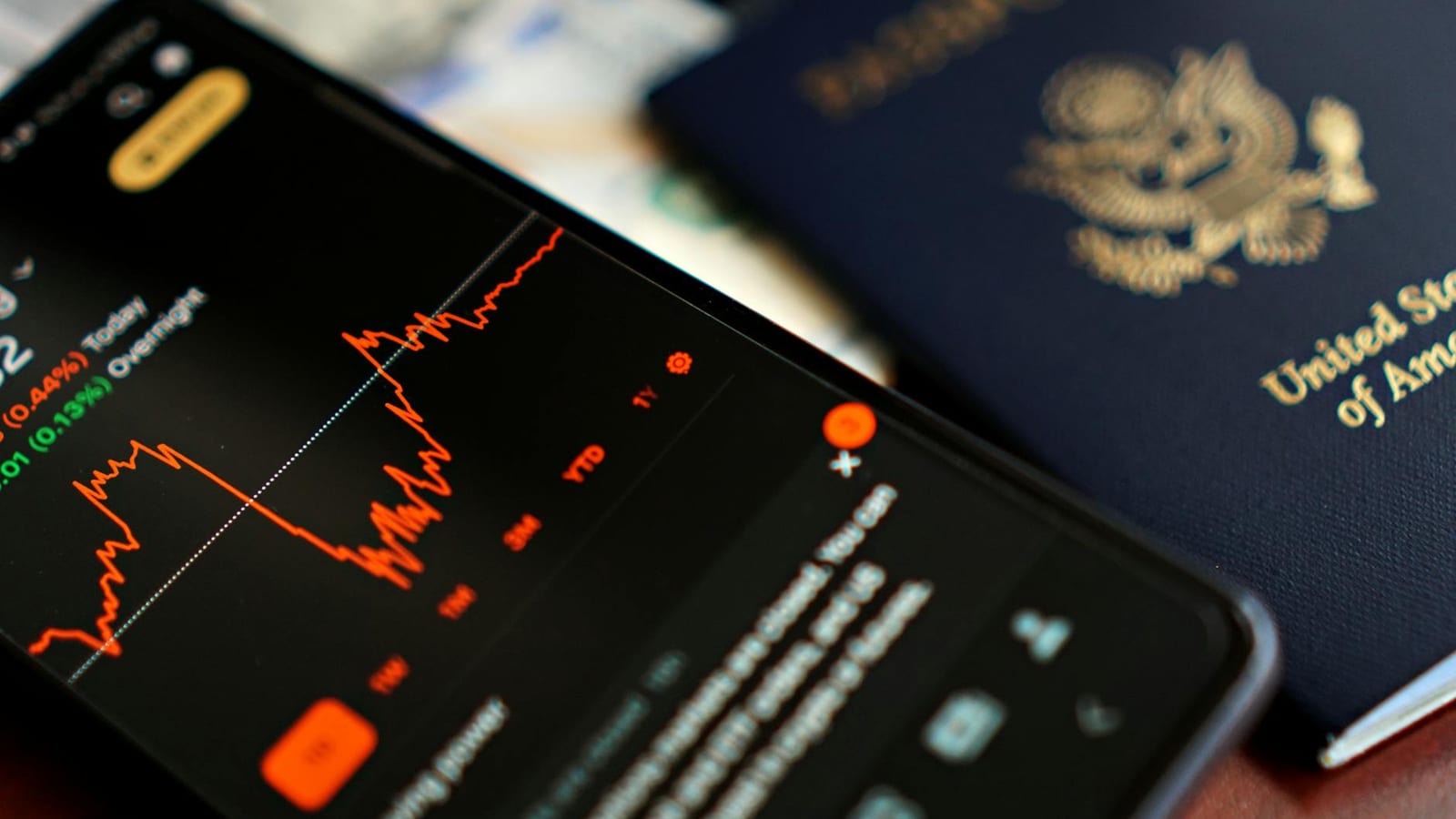
A Wall Street share may soon have a crypto twin, and that idea has made America’s market regulator pause.
For Indian investors, this may sound distant. But it touches a question that will soon reach every large market, including India. If a stock can trade as a token all day and night, who protects the small investor when things go wrong?
The SEC has delayed a plan that would have given crypto firms wider room to trade digital tokens linked to US stocks. The proposal was expected soon, but officials are now reviewing concerns raised by stock exchanges and market players.
Why tokenised stocks worry regulators
A tokenised stock is not a new company share in the old sense. Think of it as a digital version of a share, recorded on a blockchain.
In simple English, a blockchain is a shared digital ledger. It records who owns what, without one central record keeper doing all the work.
The SEC plan would allow platforms to offer tokens tied to listed shares. These tokens would need to give investors the same rights as normal shareholders. That means dividends, voting rights, and economic exposure to the underlying stock.
On paper, that sounds neat. In practice, it becomes messy very quickly.
A normal shareholder sits inside a well-known system. Brokers, depositories, exchanges, and company registrars can trace ownership. A company knows how to pay dividends and count votes.
Crypto networks work differently. Wallets can change hands. Owners may use pseudonyms. Tokens can move across borders in minutes. That makes one basic question hard to answer: who actually owns the share-like claim today?
That question matters because markets run on boring certainty. Dividends, voting, tax records, disclosures, and investor protection all need clear ownership.
The third-party token problem
The biggest concern appears to be third-party tokens. These are tokens linked to a company’s stock, but issued without that company’s approval.
That is where the debate gets sharp.
If Apple or Tesla agrees to a token structure, regulators can at least ask the company and platform to follow clear rules. But if a third party creates a token linked to a stock without company consent, the company may face obligations it never signed up for.
Public companies could then face confusion over simple duties. Who gets the dividend? Who gets to vote? What happens if token holders claim rights, but the company cannot verify them?
Amanda Fischer, policy director at Better Markets and a former senior SEC official, said corporate executives would have reason to worry about the impact. That concern goes beyond legal fine print. It goes to the heart of how companies talk to owners.
There is also a security angle. Austin Campbell, a crypto expert and professor at NYU Stern School of Business, warned that tokens could land on platforms with weak customer checks.
Know-your-customer rules are the basic identity checks financial firms must do. Banks in India know this well. You cannot open a serious account without paperwork because the system must know who is moving money.
If tokenised securities move through weakly checked crypto platforms, sanctioned entities could get access. That creates a problem for companies paying dividends and for regulators tracking market abuse.
What the SEC may still allow
The SEC has not scrapped the plan. Officials have only delayed the timing while they review feedback.
Hester Peirce, an SEC commissioner seen as friendly to crypto innovation, suggested the exemption would have limits. She said it should help trading of digital versions of the same listed equity that investors can already buy in regular markets.
That distinction matters.
A limited system could allow properly backed tokens. These would mirror real shares and follow market rules. A looser system could let many platforms create stock-like tokens without enough connection to the companies involved.
The first model looks like modern plumbing. The second looks like a parallel market with unclear accountability.
Crypto supporters argue that tokenisation can improve markets. Larry Tabb, a market structure researcher, has pointed to faster settlement. Settlement means the final exchange of cash and shares after a trade.
In India, investors already saw the benefit when equity settlement moved faster. Today, a quicker settlement cycle helps traders free up money sooner. If you sell a stock, faster settlement means you can use the cash sooner.
Tokenisation promises an even faster version of that idea. A trade could settle almost instantly. For large institutions, that can reduce the money locked up as collateral.
But faster is not always safer. A Mumbai local train runs fast because the system behind it is disciplined. Remove signals and rules, and speed becomes a risk.
Why India should watch closely
India does not need to copy America’s crypto debate. But it should watch this one carefully.
Indian retail investors have become serious market participants. Demat accounts have exploded in recent years. Young professionals now buy mutual funds, stocks, exchange-traded funds, and sometimes crypto on the same phone.
For them, tokenised stocks may sound attractive. US shares are expensive in rupee terms. A token that gives exposure to a famous American company could feel easier and more exciting.
But the small print decides whether that exposure is real or fragile.
If a token gives only price exposure, it may not offer voting rights or dividends. If it claims to offer full shareholder rights, investors must ask who guarantees those rights. If the platform fails, they must know what happens next.
This is where Indian regulators will take a conservative view. The SEBI has spent years tightening rules around brokers, disclosures, and investor money. It will not welcome a structure where ownership becomes hard to verify.
The Reserve Bank of India has also been wary of private crypto assets. Its concern has usually been financial stability, money laundering, and consumer harm.
That does not mean tokenisation has no future in India. It may work first in cleaner areas, such as bonds, settlement systems, or regulated market infrastructure. But tokenised listed shares will need strong guardrails.
Ordinary investors should also separate two ideas. Blockchain as technology can be useful. Crypto-style trading hype can be dangerous.
The gap between those two ideas is where people lose money.
The real test is trust
Markets run on trust, not just technology.
A share certificate became a demat entry because the system improved trust. Investors did not need paper anymore because depositories, brokers, exchanges, and regulators created a reliable chain.
Tokenised stocks must pass the same test. They cannot ask investors to accept mystery ownership, vague rights, and unclear legal claims just because the interface looks modern.
For a kirana store owner putting savings into equities, or a salaried investor building a retirement corpus, the question is simple. If something goes wrong, who answers the phone?
That is the question behind the SEC’s delay. Not whether finance should use new technology. It will. The real question is whether markets can modernise without making the small investor carry the hidden risk.