Wall Street rally extends as tech lifts US indices
US stocks ended higher for a ninth week, with tech shares driving the S&P 500, Nasdaq and Dow near fresh peaks for global investors.
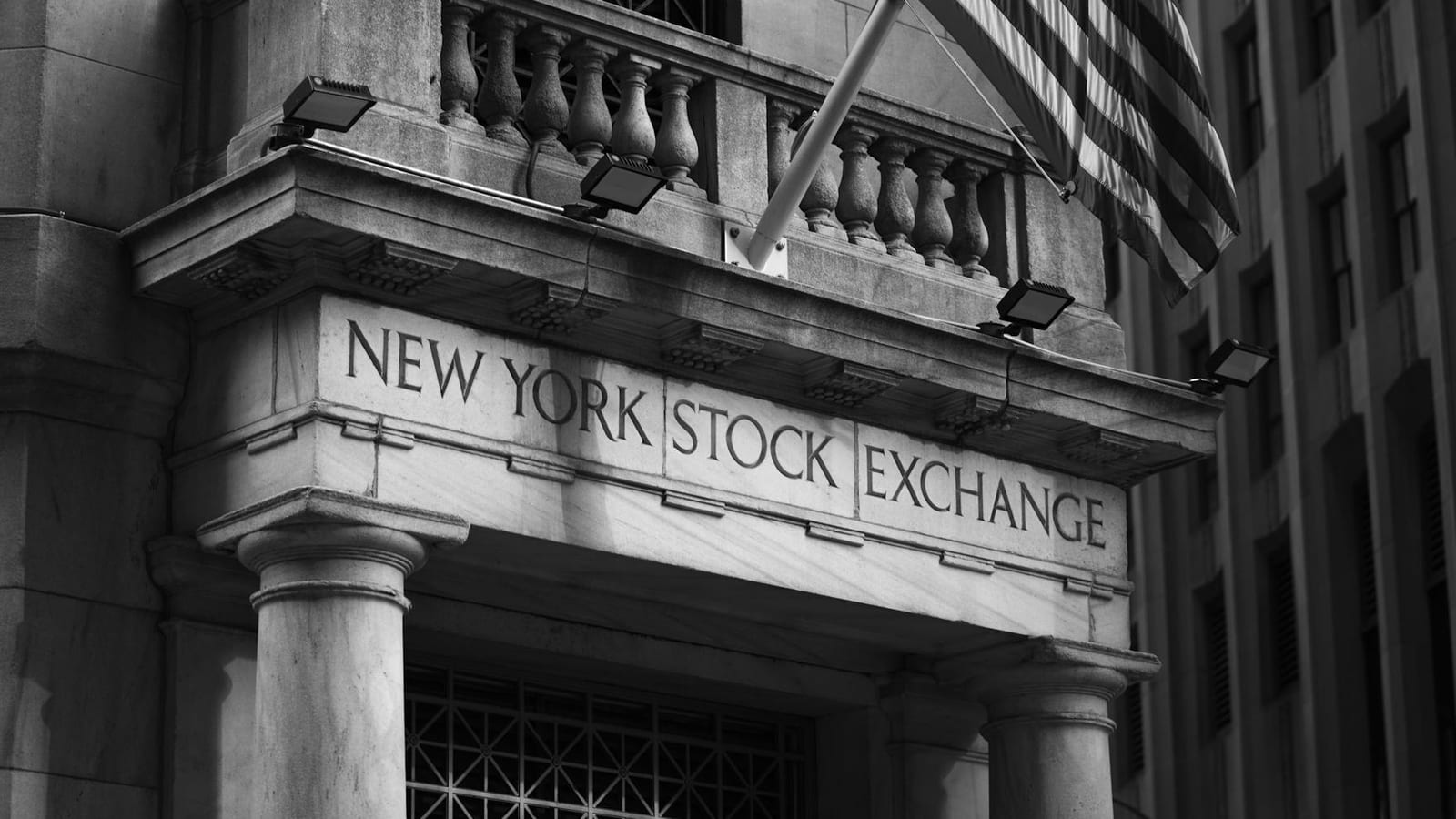
Wall Street has started behaving like that overconfident cousin at a wedding, still dancing after midnight.
The rally has now stretched into its ninth straight week. For Indian investors with money in US funds, global tech ETFs, or Nasdaq-linked products, that is not just American market trivia. It can show up quietly in portfolio statements next month.
The S&P 500 Index closed at another record on Friday, ending at 7,580.06. The Dow Jones Industrial Average finished at 51,032.46. The Nasdaq Composite, powered again by technology shares, ended at 26,972.62.
Tech stocks keep doing the heavy lifting
The week was short because of a market holiday, but Wall Street still found enough fuel.
The Dow Jones Industrial Average rose 0.72 percent for the week. The S&P 500 gained 0.22 percent. The Nasdaq Composite added 0.20 percent.
That may sound small. But when markets sit near record highs, even modest gains matter. A ₹5 lakh investment tracking the S&P 500 would roughly gain ₹1,100 in a week, before currency moves and fund charges.
The real muscle came from technology. The tech sector inside the S&P 500 had already jumped more than 15 percent in May. Most other sectors did not match that pace.
That tells us something important. This is not a broad street rally where every shop is busy. It is more like one glittering mall pulling the entire neighbourhood’s rent higher.
Artificial intelligence remains the big magnet. Investors still want companies that sell chips, servers, cloud power, or software linked to AI demand.
Dell Technologies became the week’s loudest example. Its shares surged nearly 30 percent after the company lifted its sales outlook. Dell said AI servers could bring it about $60 billion in expected revenue.
For Indian retail investors, this is the tricky part. AI-linked stocks have created real wealth. They have also made valuations harder to digest. When expectations run this hot, even a decent quarterly result can disappoint.
Oil relief calms nervous investors
Markets also got help from crude oil. Lower oil prices worked like a pressure valve.
Brent crude moved lower during the week as investors watched talks between the United States and Iran. On Friday, the August Brent contract fell 1.7 percent to $91.12 a barrel. US crude for July delivery also dropped 1.7 percent to $87.36.
The talks centred on keeping shipping routes open near the Strait of Hormuz. That narrow waterway matters because a large share of global oil passes through it.
If traffic there slows, oil prices can jump quickly. India feels that pain faster than many countries. We import most of our crude oil, so expensive oil can hit fuel prices, airline costs, company margins, and the rupee.
For a household, this chain looks very simple. Costlier oil can mean dearer transport, higher vegetable prices, and pressure on monthly budgets.
Markets breathed easier because the risk of a sudden oil shock seemed lower. But the situation remains fragile. US President Donald Trump had not formally approved the reported arrangement, while Iranian state media said no final deal had been reached.
So investors are cheering progress, not peace. That difference matters.
Bonds signal rate-cut doubts
The bond market also gave stocks some support.
The yield on the benchmark US 10-year Treasury note eased to 4.44 percent from 4.45 percent. It has now fallen for four straight sessions. The 30-year Treasury yield also slipped to 4.9817 percent.
A bond yield is the return investors demand for lending money. When yields fall, stocks often look more attractive. Borrowing conditions also look slightly less tight.
The Federal Reserve remains central to this story. Markets expect the US central bank to keep interest rates unchanged at its next meeting. Many investors also believe rates may stay steady for the rest of the year.
That is not exactly a rate-cut party. It is more like investors saying, “At least things are not getting worse.”
The Fed still worries about inflation. If oil flares up again, or if wages and rents stay sticky, rate cuts can move further away.
For Indians, US rates matter more than they once did. High US rates can pull global money toward dollar assets. That can pressure emerging markets, including India. It can also affect the rupee, foreign investment flows, and imported inflation.
The dollar index slipped 0.1 percent to 98.90. The euro gained 0.1 percent to $1.1663. A softer dollar usually helps global risk appetite, though currency moves rarely follow one neat script.
What Indian investors should watch
The Nasdaq Composite has become a familiar name in Indian homes.
Many young professionals now own US stocks through apps, international mutual funds, or feeder funds. Parents saving for children’s foreign education also watch the dollar and US markets closely.
That makes this Wall Street rally more personal than it first appears. A rising Nasdaq can lift portfolio values. But a weaker rupee can change the final return for Indian investors. Fund expenses and tax rules also eat into the headline gain.
The lesson is not to avoid US markets. The lesson is to avoid treating record highs as a guarantee.
Tech has done most of the lifting. AI has driven much of the excitement. Oil has cooled just enough to keep inflation fears under control. The Fed has not scared markets. Put together, that is a powerful mix.
But each part can shift quickly. A failed US-Iran understanding can push crude higher. A stubborn inflation reading can harden the Fed’s tone. A weak earnings outlook from one large AI stock can shake the whole tech trade.
Indian investors should also watch concentration. If a fund’s returns come from only a handful of tech names, the risk is higher than the index label suggests.
The smarter question is not whether US stock markets will rise next week. Nobody knows that cleanly.
The better question is whether your portfolio can handle a sharp fall after such a long climb. Nine straight winning weeks feel good on paper. They also make discipline more valuable.
For ordinary investors, Wall Street’s record run offers both opportunity and warning. The world’s biggest market is still rewarding optimism. But optimism works best when paired with cash buffers, sensible allocation, and the humility to know that record highs can turn suddenly quiet.