Ankara CHP raid deepens fears over Turkey democracy
Police entered CHP headquarters in Ankara after a court removed its leader, escalating concerns over opposition pressure and Turkey's democracy.
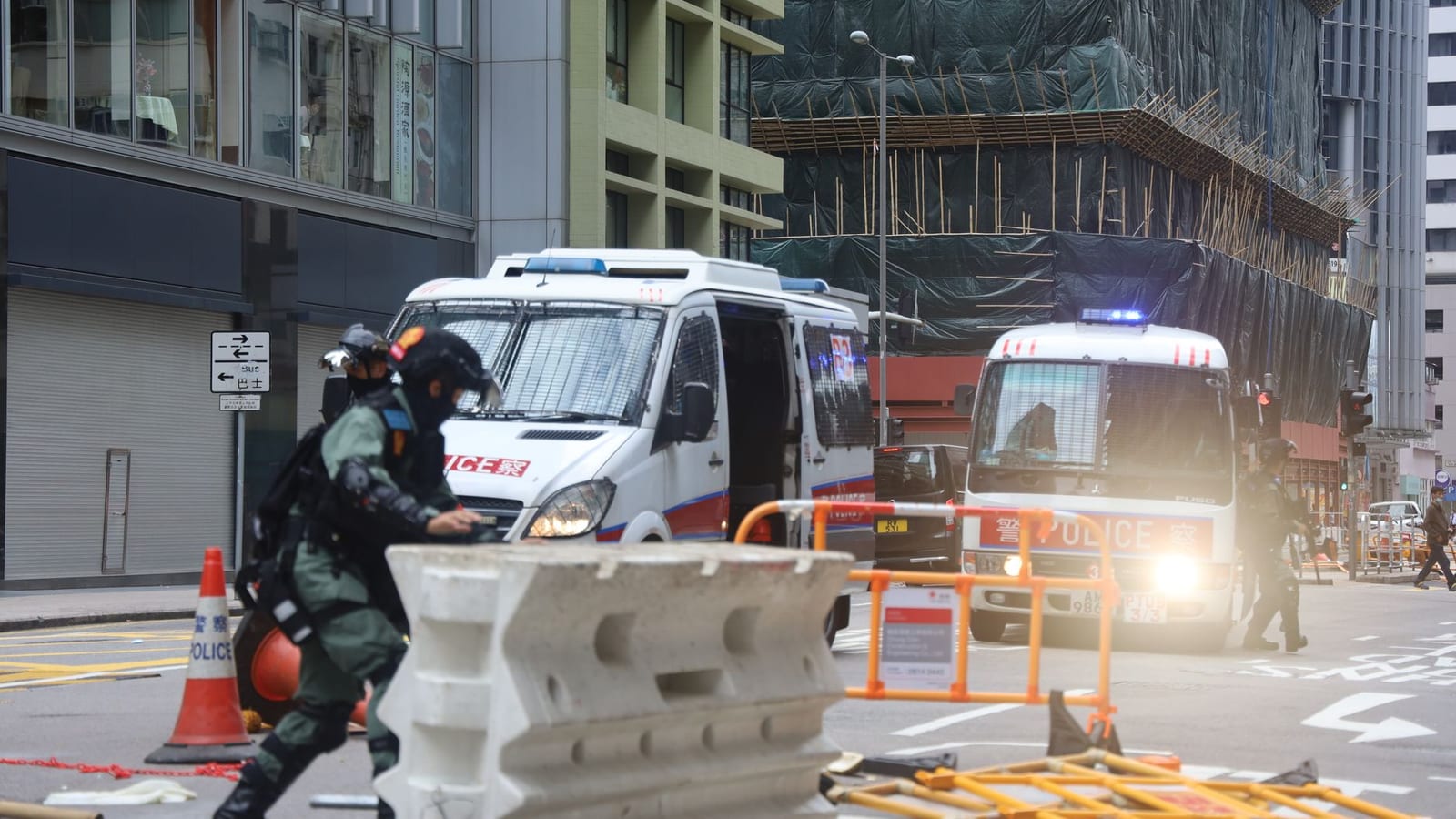
A cloud of tear gas inside an opposition party office is never just a local law-and-order scene. In Turkey, it now looks like a warning about how elections can be squeezed without formally cancelling them.
On Sunday afternoon, police entered the headquarters of the CHP in Ankara after a court removed its leader, Özgür Özel. Officers broke through barricades, used tear gas, and reportedly fired rubber bullets as party workers and MPs resisted the eviction.
For Indian readers, this is not some distant Turkish drama. Turkey sits across the fault lines of Europe, West Asia, NATO, Russia, Ukraine, and the Islamic world. When its democracy shakes, the tremor travels.
Ankara raid raises bigger alarm
The immediate dispute looks technical on paper. A court in Ankara invalidated the CHP’s 2023 party congress, where Özel had defeated former leader Kemal Kilicdaroglu.
The case centres on allegations that delegates were bribed to vote for Özel. CHP leaders deny the charge. They have appealed to Turkey’s top court and argue that election authorities, not ordinary courts, should decide internal party election disputes.
But politics rarely stays on paper. After the ruling, Ankara authorities ordered the CHP headquarters cleared. Özel stayed inside for a while, reportedly in his 12th-floor office, as supporters gathered around him.
He later walked out to applause and told supporters that the party would now take its fight to streets, squares, and the path to power. He then moved towards parliament with CHP MPs and followers around him.
That image matters. An opposition leader leaving party headquarters under police pressure, then walking to parliament, is rich political theatre. It also tells citizens that the fight has moved beyond legal filings.
Why the CHP matters
The CHP is not a small pressure group. It is Turkey’s main opposition party and the republic’s founding political party. It carries the old secular, republican tradition of modern Turkey.
For more than two decades, President Recep Tayyip Erdoğan has dominated Turkish politics. He has survived protests, attempted coups, economic crises, and fierce international criticism.
Yet the CHP under Özel had begun to look dangerous for him again. In the 2024 local elections, the party won a surprise victory and captured the largest number of mayoral posts across Turkey.
That result changed the mood. It suggested voters were willing to punish Erdoğan’s ruling camp, especially over inflation and living costs. Any Indian family that tracks vegetable prices will understand that anger.
Kilicdaroglu, by contrast, represents an older opposition era. He led the CHP for more than a decade and lost to Erdoğan in the presidential contest three years ago.
After that defeat, many opposition supporters blamed him for wasting a rare opening. Özel then defeated him in the party leadership race. The court has now temporarily restored Kilicdaroglu to the chair.
That is why the ruling has angered so many CHP workers. They see it not as a neutral correction, but as a forced return to a leader Erdoğan would rather face.
Courts become the battlefield
The Turkish government says the judiciary acts independently. Erdoğan has also framed the dispute as an internal CHP fight.
His opponents see something else. They argue that the courts have become a political tool. In that reading, the ballot box still exists, but the system decides who gets to compete properly.
This is the quiet danger in many modern democracies. The old picture of tanks on streets now looks outdated. Today, pressure can come through police cases, court orders, party bans, media pressure, and corruption probes.
Turkey has seen several moves against opposition figures in recent years. Opposition politicians have faced terror and corruption investigations. Former Istanbul mayor Ekrem Imamoğlu, one of Erdoğan’s strongest rivals, has also faced legal pressure.
The pattern is hard to miss. When opposition leaders win cities, they become national threats. When they become national threats, legal cases begin to crowd the field.
This matters for ordinary Turks because politics and daily life are not separate. A worker struggling with rent, a shopkeeper battling inflation, or a student looking abroad for jobs needs real choices at election time.
If the opposition weakens, voters lose bargaining power. Governments then feel less pressure to fix prices, jobs, services, and corruption.
India should watch Turkey closely
India and Turkey do not always see eye to eye. Ankara has often taken positions on Kashmir that New Delhi dislikes. Turkey has also built close ties with Pakistan in defence and diplomacy.
Yet India cannot ignore Turkey. It controls access between the Black Sea and the Mediterranean. It is a NATO member with deep links to Russia. It has influence in West Asia, Central Asia, the Caucasus, and the Islamic world.
The wars in Ukraine and West Asia have made Turkey more useful to every major power. Western capitals may criticise Erdoğan, but they also need him. That gives Ankara room to push harder at home.
This is the subtext many outside observers miss. A strategically useful country often gets a longer rope. The same Western governments that speak of democracy also calculate military bases, migration flows, energy routes, and war diplomacy.
India understands this game well. New Delhi deals with countries as they are, not as seminar rooms wish them to be. Still, democratic backsliding in a major Eurasian power affects India’s interests.
If Turkey turns more unpredictable, Indian diplomacy has to work harder. Trade, aviation, defence technology, and regional alignments all become more complicated.
There is also a larger lesson. Democracies do not weaken only when voting stops. They weaken when opposition parties cannot organise freely, courts lose public trust, and police action starts looking political.
Europe has limited room
The European Union has criticised the pressure on Turkish opposition figures. Germany’s foreign minister also voiced concern, including over Turkey’s long-stalled ambition to join the EU.
But Europe’s power over Erdoğan is limited. Turkey helps manage migration into Europe. It remains vital to NATO strategy. It also talks to Russia and Ukraine in ways many Western states cannot.
That means Erdoğan can absorb criticism. He has done it before. As long as Turkey stays strategically valuable, outside pressure will likely remain sharp in words and soft in consequences.
Inside Turkey, the bigger question is whether opposition anger can sustain itself. Street protests can signal resistance, but they also carry risk. The government can use disorder to justify more policing.
Özel’s challenge is therefore delicate. He must keep the CHP energised without giving the state an excuse to crush the movement harder.
For now, the fight moves to courts, streets, parliament, and public opinion. Turkey still has elections. It still has opposition parties. It still has citizens willing to protest.
But the real test is simpler. Can voters choose between genuine alternatives without the state rearranging the contest before polling day? For Indians watching from afar, that question should feel familiar enough to matter.