Myanmar Rebel Area Blast Kills at Least 46 in Shan
At least 46 people died and about 70 were injured after stored explosives detonated in Namhkam, a TNLA-held town near India's Northeast border.
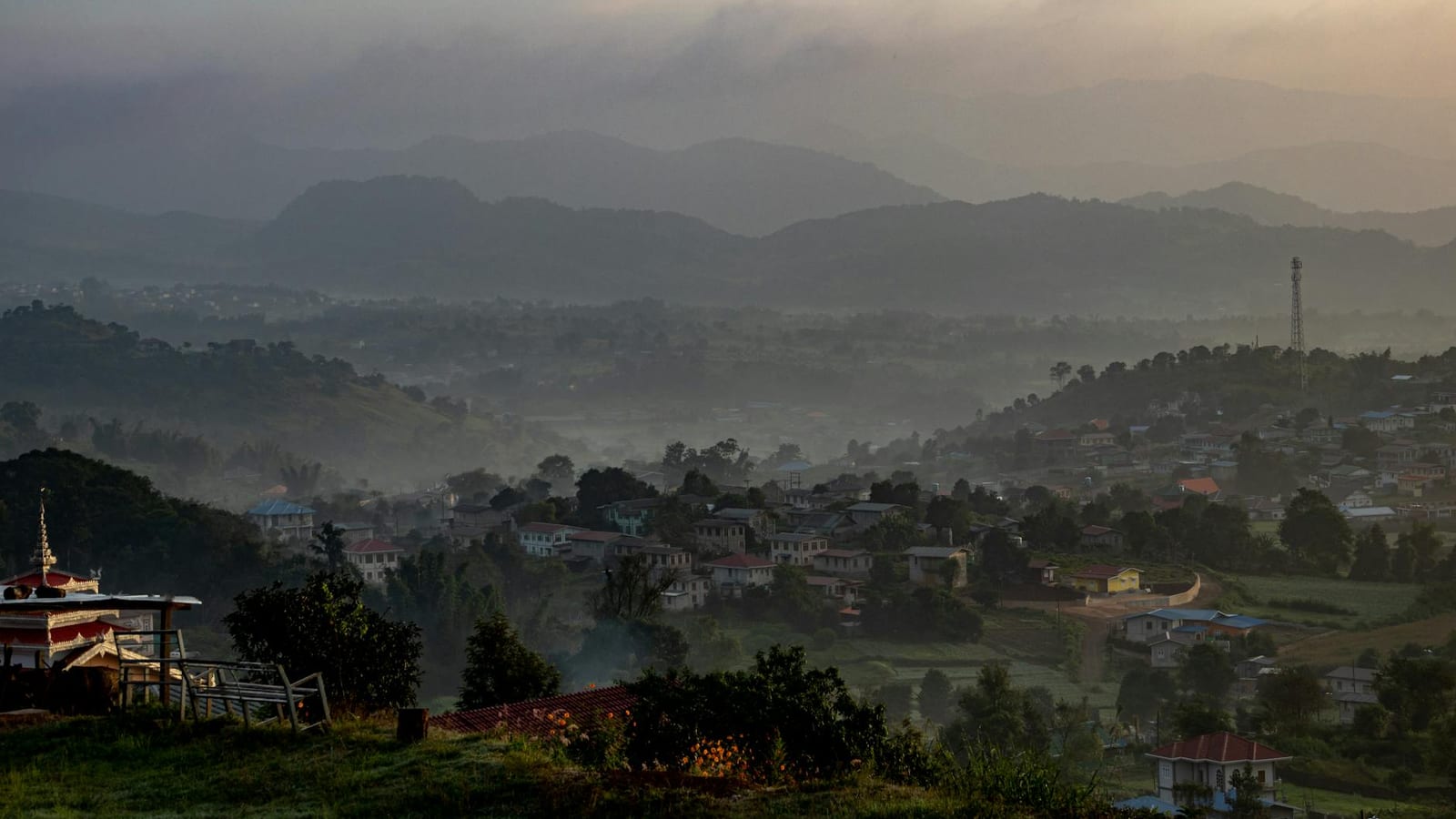
A village in northern Myanmar woke up to war. By noon, it was dealing with something even crueler, an explosion so large that homes collapsed and families vanished under the rubble.
At least 46 people died on Sunday, May 31, in Namhkam township, rescue workers said. Another rescuer put the toll at 59. Around 70 people were injured, and officials fear more bodies may still lie beneath damaged houses.
For India, this is not a distant tragedy on a map. Myanmar shares a long, porous border with India’s Northeast. When Myanmar burns, the smoke rarely stops at the frontier.
Namhkam counts its dead
The blast took place in Namhkam, a town in Shan State, a region controlled by the Ta’ang National Liberation Army, or TNLA. The rebel group called it an accidental detonation of stored explosives.
The TNLA said the explosives belonged to its economic department. It also said they were meant for mining and quarrying work. The group has opened an inquiry into what triggered the blast.
That official wording sounds neat. The scene on the ground did not.
Rescue workers said children were among the dead. Injured villagers were moved to a local hospital. Emergency teams collected bodies for cremation, even as they searched broken homes for more victims.
The TNLA did not give a death toll in its statement. It said many villagers had died, many were injured, and homes had been damaged. In a conflict zone, even counting the dead becomes a political act.
For ordinary families, though, the question is simpler. Why were so many explosives stored close enough to homes to wipe out a neighbourhood?
Myanmar’s war has changed shape
Myanmar has lived through armed conflict for decades. But the current civil war began after the military seized power on February 1, 2021. Since then, the country has fractured into many battlefields.
The junta now fights pro-democracy resistance groups and powerful ethnic armed organisations. The TNLA is one of the stronger ethnic rebel forces. It operates in the north, close to key trade routes and mineral belts.
That geography matters. Northern Myanmar is not just a war zone. It is also a resource zone. Rubies, jade, rare minerals, timber and cross-border trade all feed power networks.
In such places, guns and money sit very close together. Armed groups need funds to fight. Mining provides cash. But it also brings explosives, unsafe pits, private checkpoints and weak oversight.
Accidents are common in Myanmar’s mines. Safety rules are thin, and enforcement is thinner. Workers often enter dangerous sites because there are few better options.
The Namhkam blast shows how the war economy can swallow civilians. These were not soldiers killed in battle. These were villagers living beside the machinery of conflict.
For Indian readers, there is a familiar lesson here. When armed politics and illegal or poorly regulated commerce mix, ordinary people pay first.
China’s shadow over the conflict
No discussion of northern Myanmar is complete without China. Beijing has deep interests in the region, from border security to trade routes and access to resources.
In early 2024, three armed groups, including the TNLA, agreed to ceasefire arrangements with Myanmar’s generals. China helped broker those deals. But the fighting did not stay quiet for long.
By the summer of 2024, the TNLA had launched attacks against junta forces in Mandalay region and neighbouring Shan State. It later captured Mogok, a town famous for Myanmar’s ruby trade.
The group then agreed to withdraw in October 2025, again after Chinese mediation. That pattern tells us something important. China does not simply back one side and walk away.
Beijing adjusts its position based on its interests. It wants stability along its border. It wants trade to move. It wants influence over both the junta and armed groups.
This is where India should watch closely. Myanmar is a gateway to Southeast Asia for India’s Northeast. It also sits on the fault line between Indian and Chinese influence.
New Delhi has often handled Myanmar with caution. It cannot ignore the junta, because border security requires contact. It also cannot ignore the democratic collapse and ethnic conflicts next door.
The Namhkam explosion is not a diplomatic headline by itself. But it is part of the larger unravelling of Myanmar’s state. That unravelling affects refugees, narcotics, arms flows and insurgent networks near India.
Why India cannot look away
India shares a border of more than 1,600 kilometres with Myanmar. Mizoram, Manipur, Nagaland and Arunachal Pradesh all feel the pressure when violence rises across the line.
After the 2021 coup, thousands of people from Myanmar crossed into Indian states. Local communities, especially in Mizoram, responded with sympathy. They saw ethnic and family ties, not just foreign nationals.
But the security picture is more complicated. A broken Myanmar creates space for smuggling networks. Drugs, weapons and criminal groups move faster when the state retreats.
The conflict also affects India’s Act East policy. That policy depends on roads, trade and connectivity through the Northeast into Southeast Asia. Instability in Myanmar makes every such project harder.
Think of a trader in Moreh, a transporter in Imphal, or a young worker hoping for better trade links. For them, Myanmar’s war is not abstract foreign policy. It decides whether roads open, markets function, and jobs appear.
The blast in Namhkam also points to a bigger global pattern. Civil wars today do not remain cleanly military. They stretch into mines, supply chains, villages and refugee routes.
The supporting picture from Sudan is grim too. Drone strikes in Kordofan killed dozens over the same weekend, including children and displaced people, local officials and rights monitors said. Different country, same lesson.
Modern conflict has become cheaper to spread and harder to contain. Drones, explosives and armed local economies now hurt civilians far from formal front lines.
For India, the message is blunt. We cannot treat neighbourhood instability as background noise while focusing only on big-power summits.
Myanmar’s tragedy will keep knocking on India’s door, through refugees, border trade, security alerts and humanitarian pressure. The Namhkam families have lost homes and children today. Tomorrow, the wider region will confront the cost of a country where war, minerals and power have become dangerously tangled.