US judge orders Trump name removed from Kennedy Center
A federal judge ruled the Kennedy Center can carry only John F Kennedy's name unless Congress approves a change, reversing its board.
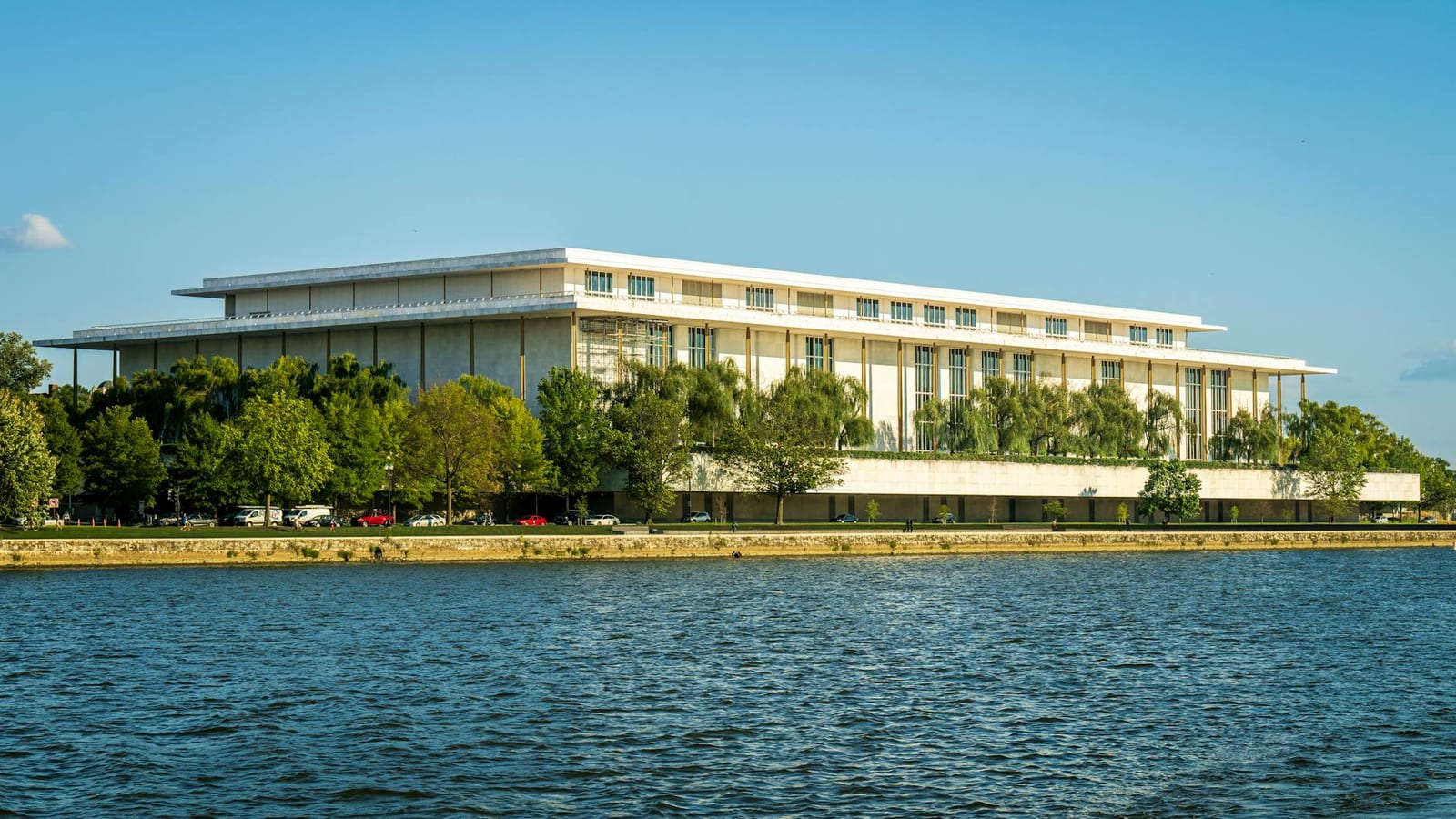
A president can put his name on towers, hotels, golf courses, and campaign caps. A national cultural centre is a different matter.
That is the simple message from Washington this week, after a federal judge ordered Donald Trump’s name removed from the Kennedy Center facade and official branding.
For Indian readers, this is not just another American courtroom drama. It is a fight over who owns public institutions, elected leaders or the law that created them.
Judge draws a hard line
US District Judge Christopher R Cooper said the Kennedy Center’s founding law was clear. The arts complex could carry only the name of former president John F Kennedy, unless Congress changed it.
The Kennedy Center board had approved the renaming in December 2025. Cooper called that move unlawful and ordered Trump’s name removed from the building and official signatures.
His reasoning was blunt. Congress gave the centre its name, so only Congress could change it. That may sound like legal housekeeping, but it cuts deep.
In politics, names carry power. They tell citizens who gets remembered and who gets honoured. Trump’s attempt to attach his name to the Kennedy Center turned a cultural institution into a political battlefield.
The judge also paused a plan to shut the centre for summer renovation work. That plan came soon after Trump spoke of closing the venue for two years. A Democratic lawmaker from Ohio had challenged both moves in court.
Why this centre matters
The John F Kennedy Center sits by the Potomac River in Washington. It has long hosted theatre, dance, music, opera, and public events.
It is not merely a fancy performance hall. It is one of America’s most visible cultural institutions. It carries the memory of a president assassinated in 1963, and the idea of public arts as national service.
That is why the naming battle has stirred nerves. Public buildings are not private trophies. They belong to citizens, taxpayers, artists, workers, and audiences.
Trump moved quickly after returning to office in 2025. He removed several board members, took over as chair, and put ally Richard Grenell in charge of reshaping the centre.
Trump said he wanted to fight what he described as anti-American propaganda in the cultural space. His critics saw something else, a political takeover of an institution meant to outlast governments.
For the dancers, stagehands, musicians, ushers, and ticket-buying families, these fights create real uncertainty. A two-year closure would not be an abstract headline. It would affect jobs, shows, school trips, and cultural calendars.
Culture becomes a political arena
America has always argued about culture. But under Trump, the argument has moved from criticism to control.
The Kennedy Center case shows how power can travel through boards, budgets, branding, and renovation plans. You do not need to ban art to reshape a cultural institution. You can change who runs it, what it promotes, and what it fears.
That is why courts become important in such moments. They check whether a leader’s political wish fits the legal rulebook.
Indians will recognise the pattern. We often debate the naming of roads, stations, welfare schemes, universities, and stadiums. A name is rarely only a name. It signals ideology, memory, and ownership.
But the Washington order also makes one key point. Public memory cannot depend only on the leader of the day. If a law names an institution, a board cannot quietly turn it into a tribute.
That principle matters far beyond America. Democracies survive not only through elections, but through small legal limits. A court order about a building name may look minor. It still says power has paperwork.
Trump faces court pressure
The Kennedy Center order did not land in isolation. Trump is facing several legal and political challenges across the US.
A federal court in Virginia has also paused his proposed compensation fund for people he describes as victims of politically driven justice. The US Justice Department planned to put about $1.8 billion into it.
Critics argue the fund could reward Trump supporters charged after the January 6, 2021, attack on the US Capitol. Trump had already issued several pardons after returning to office.
Even some Republicans have questioned the plan. The court has set a June 12 hearing and blocked payouts for now.
Trump has also revived a defamation lawsuit against the Wall Street Journal’s publishers over a report linked to Jeffrey Epstein. A Florida court earlier found that Trump had not made a strong enough case for malice. He has now filed an amended complaint seeking huge damages.
Taken together, these cases show a presidency testing the boundaries of law, media, culture, and state power. Each courtroom becomes a place where those boundaries get redrawn.
The India angle is clear
For India, the bigger lesson is not whether Trump wins or loses one case. The lesson is how institutions behave when a powerful leader pushes hard.
America’s politics may look distant. Yet its decisions affect India through trade, visas, defence ties, oil prices, technology rules, and global markets.
When US institutions wobble, the world watches. Indian companies with American exposure watch. Students planning US education watch. Policymakers in New Delhi watch.
The same live stream of American politics also shows inflation rising, legal fights multiplying, and election maps being redrawn. These are not separate stories. They are symptoms of a country under intense political strain.
That matters because the US remains India’s most important strategic partner outside the neighbourhood. India needs a stable Washington, even when it disagrees with Washington.
The Kennedy Center fight may not move stock markets in Mumbai. It will not change petrol prices in Pune tomorrow. But it tells us something about the political mood inside America.
When leaders start fighting over cultural symbols, they are often fighting for deeper control. Courts then become the last referee before public institutions bend too far.
For ordinary Indians, the story is familiar enough. Institutions look solid from outside, until someone tests their foundations. In Washington this week, a judge said one such foundation still holds. The next question is how many more will be tested.