Hajj Opens In Mecca As Heat And Regional Risks Rise
More than 1.5 million foreign pilgrims have reached Saudi Arabia for Hajj as extreme heat, higher costs and Middle East tensions complicate travel.
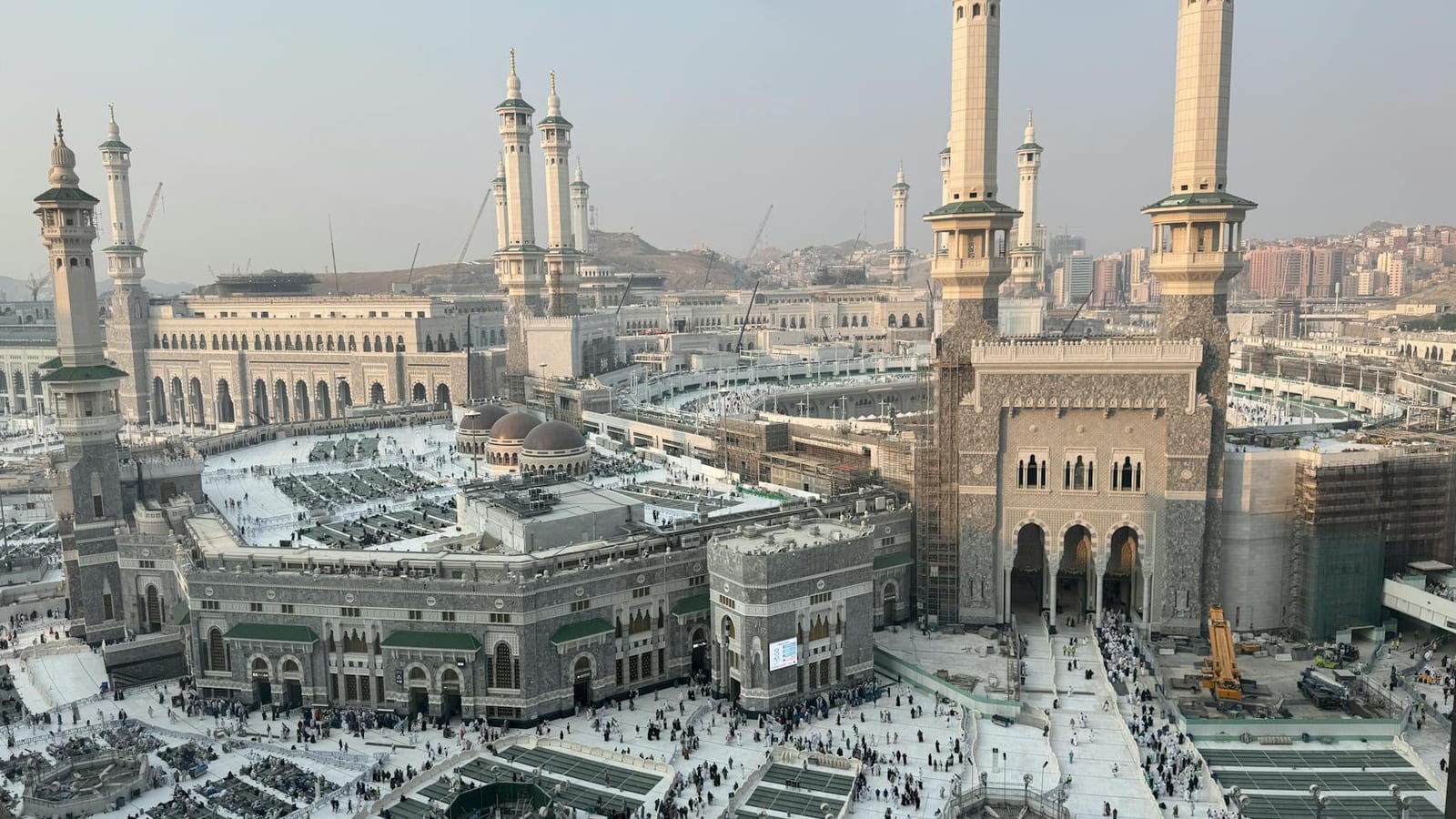
For many pilgrims, Hajj begins years before the first flight takes off. It begins with savings, paperwork, waiting, and one quiet prayer repeated often.
This week, more than 1.5 million pilgrims from outside Saudi Arabia have arrived for Hajj, stepping into one of Islam’s most sacred journeys under unusually difficult conditions.
The heat is fierce. Travel costs are higher. Regional tensions around Iran and the Strait of Hormuz have added a layer of worry to an already demanding pilgrimage.
Pilgrims gather in fierce heat
The annual pilgrimage officially began on Monday, with pilgrims moving through Mecca and preparing for the rituals ahead.
Saleh bin Saad Al-Murabba, commander of the Hajj passport forces, said more than 1.5 million foreign pilgrims had entered the kingdom by Friday.
Many have already circled the Kaaba inside the Grand Mosque. That act alone can overwhelm first-timers. The crowds, the heat, the emotion, all arrive together.
Egyptian pilgrim Samya Abdul Moneim captured that feeling in simple words. She said she felt blessed and deeply happy to have reached Mecca.
For believers, Hajj is not a normal trip. It is one of Islam’s Five Pillars, required once in a lifetime for those who can afford it and are physically able.
That matters because this journey asks for both money and strength. Some pilgrims save for years. Others wait long periods for permits and approvals.
Travel worries follow pilgrims
This year, the pilgrimage comes with an uneasy regional backdrop.
US President Donald Trump said on Saturday that a peace understanding linked to Iran had been largely discussed. He said it still needed formal agreement.
The tensions matter far beyond diplomacy. The Strait of Hormuz sits on one of the world’s most sensitive energy routes. Trouble there can quickly raise fuel costs.
For Indian pilgrims, that is not some distant geopolitical line on a map. Higher fuel prices can mean costlier flights, packages, and local travel.
India’s Hajj planning has continued largely as expected. But rising travel expenses have made the journey heavier for many families.
A middle-class household saving for Hajj does not think in global oil charts. It thinks in instalments, jewellery sold, loans avoided, and children helping parents travel.
That is why fuel prices matter in a pilgrimage story. They decide who can go this year, and who may need to wait again.
Indonesia prepares backup plans
Indonesia, home to the world’s largest Muslim population, has treated the uncertainty with caution.
Authorities there have stressed contingency planning before the Hajj season. They have also told officials that extra travel costs should not fall on Indonesian pilgrims.
That instruction says a lot. Governments know Hajj is not just tourism. It carries deep religious meaning, and any disruption can turn emotional quickly.
Saudi Arabia also has a large logistical task. It must move huge crowds through tightly scheduled rituals in high temperatures.
Volunteers have been handing out water bottles. Pilgrims have used umbrellas, handheld fans, and whatever shade they can find.
Large misting fans have also helped cool crowded areas. In this heat, hydration is not comfort. It is basic safety.
Arafat remains the emotional peak
Many pilgrims are now moving towards Mina, the vast tent city outside Mecca.
There, they will pray, rest, and prepare for the most intense part of Hajj. The rhythm is old, but each pilgrim experiences it personally.
On Tuesday, pilgrims are expected to stand at Arafat. For many, this is the spiritual heart of Hajj.
They will pray, seek forgiveness, and make supplications. Many also carry requests from relatives who could not come.
That image is easy to understand in India. One person travels, but an entire family often feels present through them.
Parents ask for prayers. Children send hopes. Friends request remembrance. The pilgrim becomes a messenger of many private burdens.
Faith meets practical reality
Hajj has always joined the sacred and the practical.
It brings Muslims of many languages, races, and income levels into one shared space. That unity remains one of its strongest emotional forces.
But the practical realities have grown sharper. Extreme heat now shapes how pilgrims move, rest, and plan their day.
Travel costs also shape access. A journey required only of those who can afford it still feels painful when prices rise suddenly.
For Indian families, especially those outside big cities, the cost is not abstract. A higher fare can delay a dream by another year.
That is the quiet story behind the crowds. Every white garment in Mecca carries a private account book of sacrifice.
The coming days will test planning, patience, and physical strength. For ordinary pilgrims, the hope is simple. They want to complete the rites safely, return home changed, and feel that the long wait was worth it.