Hajj Opens In Saudi Heat As 1.5 Million Pilgrims Arrive
Over 1.5 million pilgrims have reached Saudi Arabia for Hajj as extreme heat and Middle East tensions shape travel, safety and family concerns.
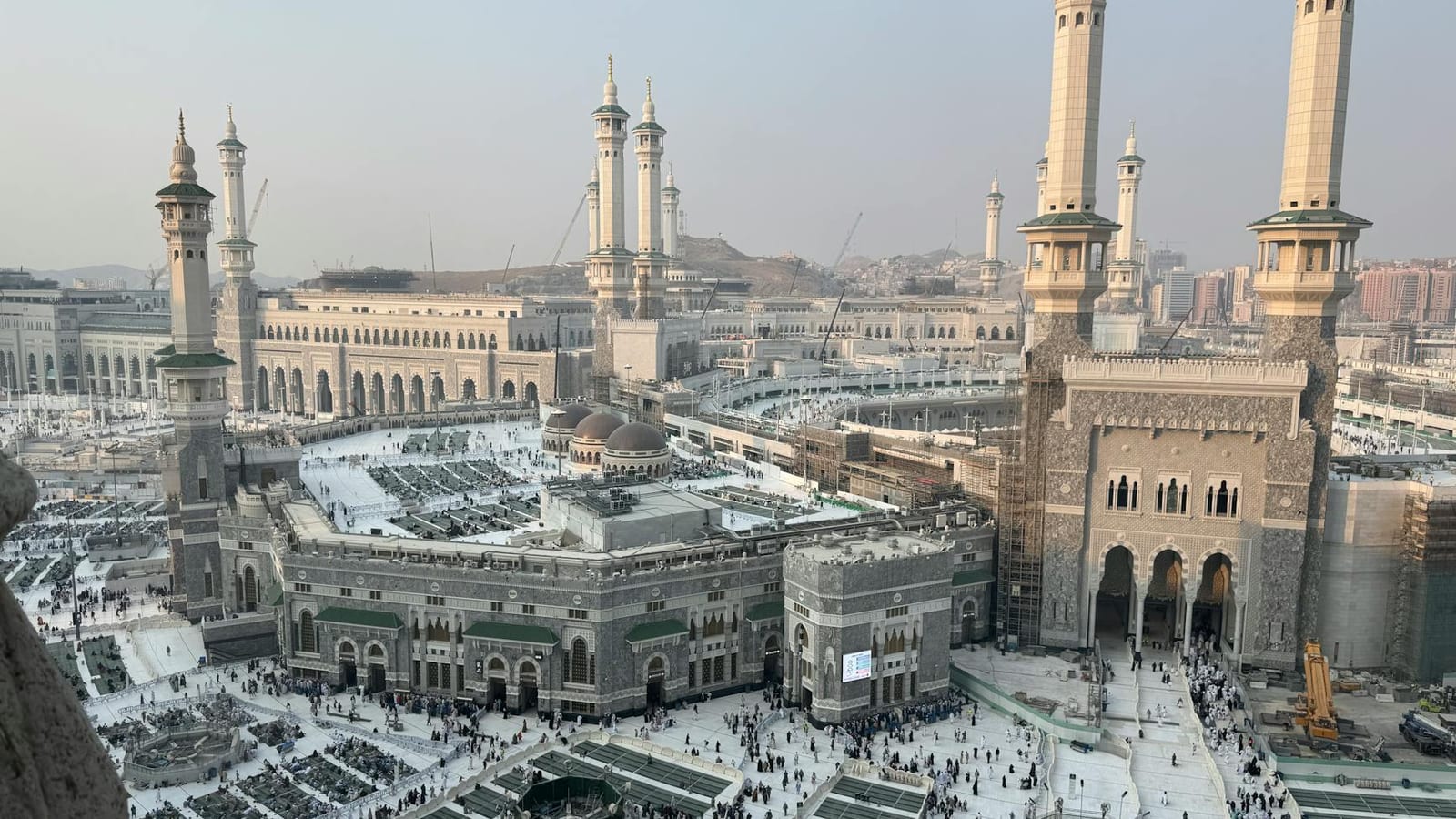
More than 1.5 million people have reached Saudi Arabia with prayer mats, umbrellas, patience, and nerves.
The annual Hajj has begun in a season of punishing heat and unusual tension. For many pilgrims, this is the journey they saved for over decades. For others, it is also a test of stamina, money, and faith.
This year, the pilgrimage is not unfolding in a quiet region. A fragile ceasefire around the Iran conflict has reduced immediate fears, but not removed them. For families watching from India, Indonesia, Egypt, and beyond, every flight and fuel-price alert matters.
Pilgrims gather in fierce heat
Saleh bin Saad Al-Murabba, commander of the Hajj passport forces, said more than 1.5 million pilgrims had arrived from outside Saudi Arabia by Friday.
That number tells only half the story. The real picture is on the ground in Mecca, where pilgrims have already begun circling the Kaaba inside the Grand Mosque.
The heat has shaped the rhythm of the pilgrimage. Many pilgrims now move with umbrellas, handheld fans, water bottles, and wet towels. Volunteers have been handing out water, while large misting fans try to soften the desert air.
For older pilgrims, this matters deeply. Hajj asks for devotion, but it also asks for walking, waiting, standing, and managing crowds. The spiritual journey is often carried out through very physical effort.
Egyptian pilgrim Samya Abdul Moneim summed up the feeling many carry. She said she felt blessed and happy to have reached the holy city. That gratitude is common among pilgrims who spend years waiting for one permit, one chance, one opening.
Why Hajj matters so deeply
Hajj is one of the five basic duties of Islam. Every Muslim who can afford it, and is physically able, is expected to perform it once in life.
That sounds simple on paper. In real life, it can mean years of saving, paperwork, medical checks, family planning, and emotional preparation.
For an Indian Muslim family, the decision is rarely casual. A Hajj trip can involve savings built over a working lifetime. It can mean adult children helping parents fulfil a promise made many years ago.
The pilgrimage also carries a powerful sense of equality. Pilgrims arrive from different countries, languages, incomes, and social backgrounds. In the rituals, many wear simple garments and perform the same acts together.
That is why Hajj remains more than travel. It is faith, memory, discipline, and community packed into a few intense days.
The first phase usually brings pilgrims from Mecca to Mina, a vast tent city in the desert. There, they pray, rest, and prepare for the central ritual at Arafat.
On Tuesday, pilgrims are expected to stand on the plain of Arafat. Many will raise their hands in prayer, ask for forgiveness, and carry the hopes of relatives back home.
Tensions shadow travel plans
This year, the pilgrimage carries an extra layer of uncertainty because of the conflict involving Iran, Israel, and the United States.
US President Donald Trump said on Saturday that a deal linked to the war and the Strait of Hormuz had been largely worked out. He described it as a peace understanding that still needed final approval.
The Strait of Hormuz is a narrow waterway, but it carries huge importance. A large share of the world’s oil and gas moves through it. When tension rises there, fuel prices often rise far beyond West Asia.
That is where geopolitics enters the life of an ordinary pilgrim. Higher aviation fuel costs can push up airfares. Travel operators then face pressure on package prices. Families planning Hajj feel the pinch directly.
The current ceasefire has reduced panic, but it has not restored full confidence. Travellers dislike uncertainty, especially when their journey involves elderly parents, group visas, fixed dates, and religious obligations.
For Indian pilgrims, the planning has largely continued as expected. But higher fuel prices have made the journey more expensive for many.
That increase does not remain an abstract economic issue. It can affect whether a family travels this year, waits another year, or sends only one member instead of two.
Indonesia plans for contingencies
Indonesia, home to the world’s largest Muslim population, has taken a cautious approach before the Hajj season.
Authorities there have stressed contingency planning for pilgrims. They have also issued instructions to ensure extra travel costs do not get passed on to Indonesian pilgrims.
That is a sensible concern. Once pilgrims have paid, packed, and prepared emotionally, sudden cost increases can become deeply unfair.
Large Hajj systems depend on coordination across airlines, hotels, buses, local guides, health teams, and officials. One disruption can quickly affect thousands of people.
India faces a similar challenge at scale. It has a large Muslim minority, and Hajj travel needs careful organisation every year. Even when systems run normally, the journey remains demanding.
The lesson is clear. Hajj management today is no longer only about visas and flights. It is also about heat safety, emergency planning, fuel shocks, and regional risk.
Faith meets hard logistics
Travel writers often romanticise pilgrimage. Hajj does not need that treatment. Its power lies in how spiritual purpose meets hard, everyday logistics.
Pilgrims must manage fatigue, heat, crowd movement, meal timings, transport delays, and medical needs. Families back home track updates closely, especially when older relatives travel.
For first-time visitors, Mecca can feel overwhelming. The scale is vast, the emotion is intense, and the schedule leaves little room for casual tourism.
That is why preparation matters. A simple umbrella, comfortable footwear, regular hydration, and honest health planning can make a major difference.
Authorities can install misting fans and arrange water. But pilgrims and families also need practical awareness before departure.
The larger story this year is not only that Hajj has begun. It is that faith journeys now move through a world shaped by climate stress, expensive fuel, and fragile politics.
For ordinary readers in India, that is the point to remember. Hajj may be a sacred duty, but it is also a real journey taken by real people. And this year, every prayer in the desert carries a little more heat, cost, and uncertainty than usual.