Jerusalem Tourism Waits as Conflict Fatigue Deepens
Jerusalem's fragile calm after Israel-Iran fighting leaves pilgrims and culture travellers facing quieter streets, security worries and uncertain plans.
Jerusalem should be full of footsteps, camera clicks and whispered prayers in May. Instead, many of its lanes now carry a quieter sound: shop shutters, security radios and long pauses.
After months of Israel-Iran fighting, the city is not broken. Jerusalem rarely looks broken. Its stone walls have seen too much history for that. But it does look tired.
For Indian travellers, especially pilgrims and culture-seekers, this matters. Jerusalem is not just another stamp on a passport. It is one of the few cities where faith, politics, memory and fear meet at every street corner.
A sacred city under strain
The latest pause in fighting has brought some relief, but not much ease. Israel and Iran fought a sharp 12-day conflict in June 2025. Hostilities later resumed under Operations Epic Fury and Rising Lion.
After 40 days of fresh fighting, the guns have quietened for now. But nobody in Jerusalem sounds ready to call this peace.
The United States has spoken about progress in talks with Tehran. US President Donald Trump has said Washington is working towards a deal. Israel, meanwhile, has made clear that it will act if it sees a threat.
That gap between diplomacy and daily life is what visitors now feel on the ground.
At Jaffa Gate, the entrance to Jerusalem’s Old City, the usual rush has thinned. The limestone walls still glow in the sun. The alleys still hold centuries of memory. But the mood has changed.
Security checks feel tighter. Armed personnel stand at key points. Tourists move more cautiously, when they come at all.
For a city built around visitors, that silence has a price.
Empty lanes, worried livelihoods
A local shopkeeper near the market said his lane once filled up every evening. Now, he said, some days pass with barely a handful of tourists.
That one sentence explains the tourism economy better than any chart.
A souvenir shop does not live on grand strategy. It lives on pilgrims buying crosses, postcards, prayer beads and small keepsakes. A cafe owner does not survive on ceasefire statements. He needs tables filled by travellers.
One cafe owner said people now worry that flights may stop again, or that attacks may resume. For businesses that depend on pilgrims and international visitors, this fear hits every bill.
This is where the travel story becomes an economic story.
Hotels, guides, taxis, small restaurants, currency changers and souvenir stalls all depend on a steady stream of visitors. When travellers cancel, the loss moves through the city like a power cut.
Tour guide David Baruch put it plainly. Jerusalem survives on visitors, he said. When people stop coming, hotels, restaurants, guides and transport all slow down.
Indian travellers will recognise this pattern. Think of a hill town after a landslide warning, or a pilgrimage centre after a security scare. The place may remain open, but families delay plans. Group tours wait. Airlines and hotels adjust quietly.
In Jerusalem, the effect feels sharper because the city is a global religious magnet.
Faith continues, but fear lingers
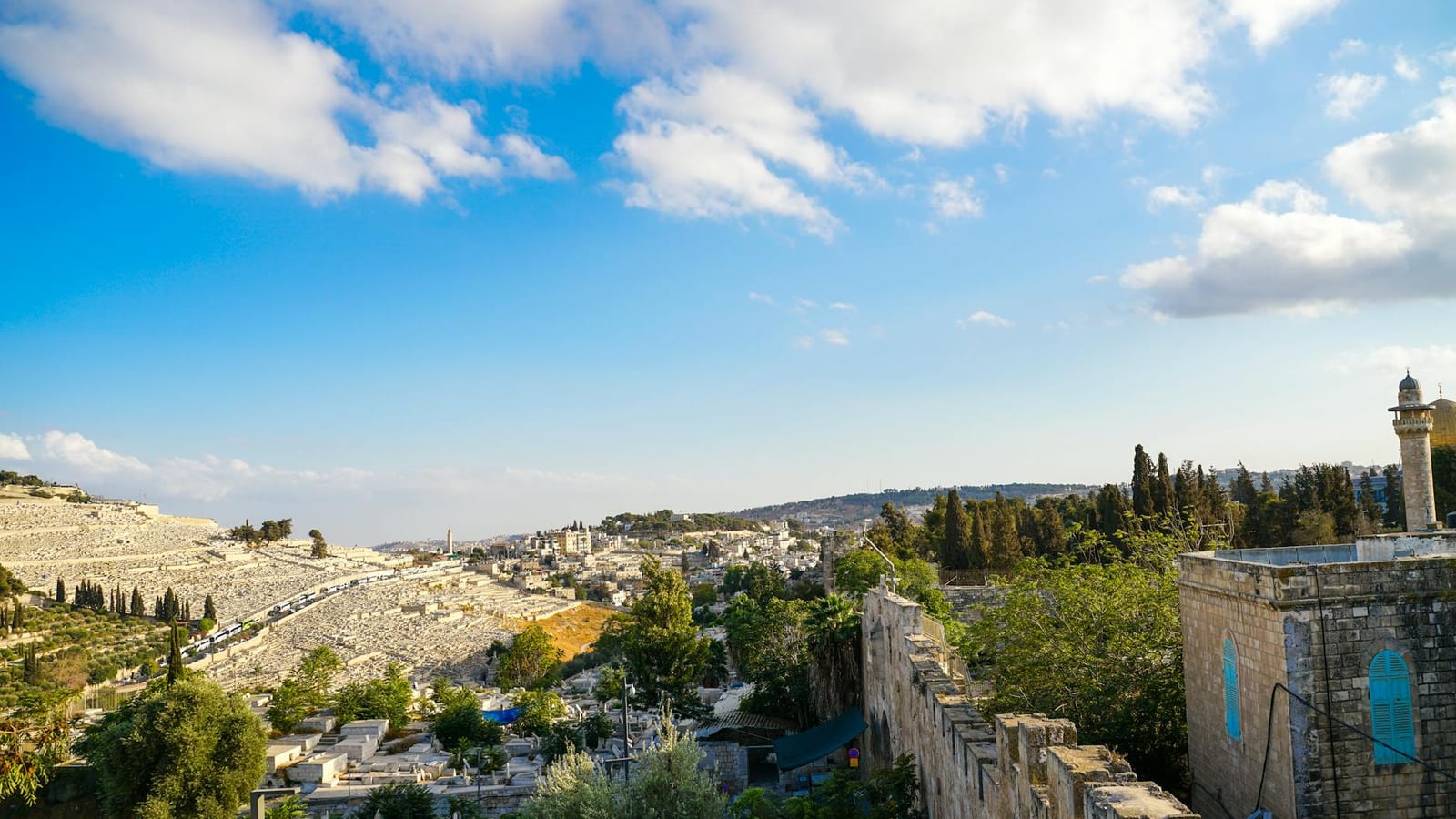
The Mount of Olives offers one of the most powerful views in the city. From there, Jerusalem opens out in layers of faith and history.
You can see the golden dome of the Al-Aqsa Mosque complex, ancient churches, Jewish burial grounds and old neighbourhoods packed close together. Few places on earth carry so much meaning in such a small space.
That beauty now sits beside unease.
Residents speak about missile alerts, wider regional tensions and the fear that fighting could spread again. The concern is not theatrical. It is practical, repeated and lived.
One young resident near the Mount of Olives said people were tired. Jerusalem, the resident said, had survived conflict before. But people from every community wanted stability.
That line matters because it cuts through the usual noise.
In cities like Jerusalem, outsiders often see only religion or politics. Locals also see school runs, grocery bills, elderly parents, rent, work shifts and children who ask hard questions after sirens.
The Church of the Holy Sepulchre, revered by Christians as the place of Jesus Christ’s crucifixion and burial, has also felt the conflict’s reach.
Church officials pointed to damage caused by missile shrapnel during an Iranian attack. Tehran had publicly said religious sites in Jerusalem would not be targeted.
Yet services have continued. Pilgrims still light candles. Clergy still carry on with prayers.
A visiting worshipper from Europe said seeing damage there was emotional. The site, the worshipper said, carried spiritual meaning for millions. People still came because faith remained stronger than fear.
For Indian Christian groups, this is the heart of the dilemma. Jerusalem is a dream pilgrimage. But a dream pilgrimage still needs flights, insurance, family approval and confidence that the route will remain open.
What travellers should read between lines
The first thing to understand is that Jerusalem has not stopped functioning. The Old City remains alive. Prayer continues at the Western Wall. Churches and markets have not disappeared.
But travel is not only about whether a place is technically open.
It is also about risk, comfort, movement and the mood of the streets. Right now, that mood appears guarded.
For families, elderly pilgrims and first-time visitors, uncertainty matters more than adventure. They need reliable transport, predictable hotel access and clear guidance from tour operators. They also need to know whether insurance covers disruption.
Backpackers and solo travellers may feel more flexible. Even then, flexibility has limits in a conflict zone. A sudden flight suspension can turn a short trip into a costly wait.
Working couples planning a long-delayed pilgrimage may also hesitate. A Jerusalem trip is not cheap. Many Indians save for months, sometimes years, for such travel.
That is why the tourism slump hurts both sides. Travellers lose a meaningful journey. Local workers lose income. Guides, drivers and cafe owners become the first casualties of fear, even when no headline mentions them.
At the Western Wall, worshippers prayed for peace, security and soldiers. Schoolgirls carrying Israeli flags said they did not want war, but trusted their soldiers. Another girl said people were used to uncertainty, yet still believed normal life would return.
That mix of fatigue and belief defines Jerusalem today.
The city remains sacred, striking and emotionally powerful. But it also asks visitors to look beyond postcards. For now, any Indian planning a trip must treat Jerusalem with both longing and caution. The next few months will show whether diplomacy can put footsteps back into its lanes, or whether its shopkeepers must keep waiting for travellers who are still too anxious to come.