Mamdani's Arsenal Kurta Turns NY Eid Into Global Debate
Zohran Mamdani's Arsenal-themed kurta at Bronx Eid prayers sparked debate over faith, football and immigrant identity as clips spread online.
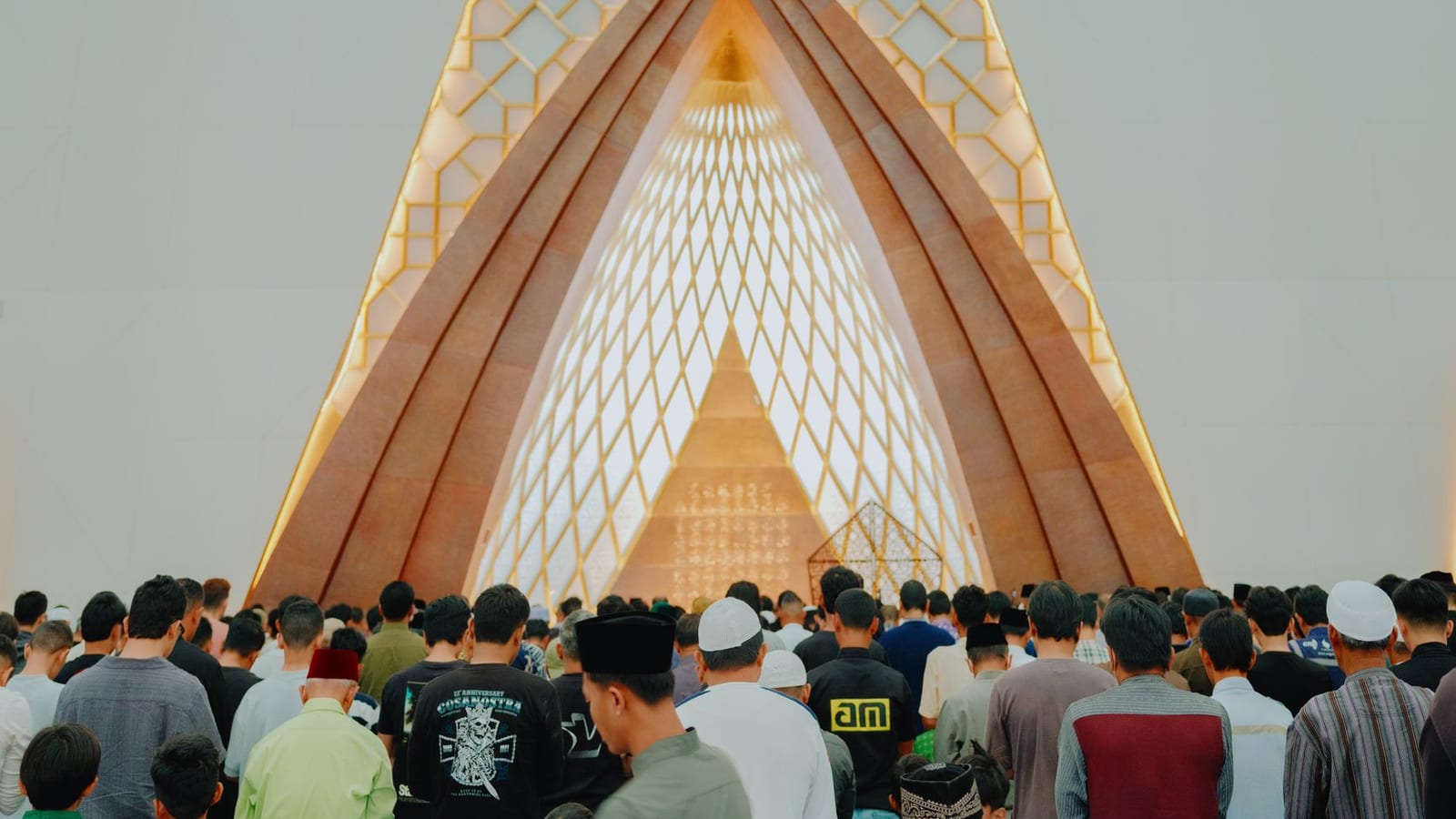
A football jersey became a kurta, a Catholic lawmaker wore a hijab, and an Eid prayer in New York became global politics by lunchtime.
That is how quickly immigrant neighbourhoods now travel online. One morning in the Bronx, a local Eid gathering sits inside a Bangladeshi Muslim community. A few hours later, Indians are watching the clips on X, arguing about faith, football, identity and America.
At the centre was Zohran Mamdani, New York City’s first Muslim mayor, wearing a custom Arsenal themed kurta for Eid al-Adha prayers.
Mamdani’s kurta did the talking
Mamdani did not arrive in a quiet festive outfit. He wore what looked like an Arsenal away kit reworked into South Asian formal wear.
The garment carried the club’s colours, striped sleeves and sponsor branding. Some viewers saw a kurta. Others read it as a thobe-style robe.
That confusion was the point, in a way. The outfit sat between several worlds at once.
For Indian viewers, the kurta shape felt familiar. For Gulf residents, the long robe hinted at the kandura or thobe. For football fans, the Arsenal badge did most of the talking.
Mamdani’s background made the choice sharper. He was born in Uganda to an Indian-origin family. He has also linked his Arsenal fandom to the club’s history with African players.
So the outfit was not just festive dressing. It became a walking map of migration, memory and sport.
For many South Asians abroad, this kind of clothing speaks softly but clearly. It says you can carry your childhood club, your family history and your faith into one public moment.
AOC’s hijab drew the heat
Standing beside Mamdani was Alexandria Ocasio-Cortez, who attended the Eid event in a black headscarf with a dark suit.
Ocasio-Cortez is Catholic. That detail quickly became the hook for conservative critics online.
Some accused her of hypocrisy. Others said she had turned a religious garment into political theatre.
The criticism was harsh, and much of it treated the hijab as only one thing. In real life, the garment carries different meanings across families, countries and faith settings.
At an Eid gathering, a non-Muslim woman covering her head can also read as respect. Many Indians understand this instinct well.
People cover their heads in gurdwaras. Some do it in dargahs. Many visitors follow temple customs even when they do not belong to that faith.
That does not erase debates around compulsion and women’s freedom. Those debates are real, especially in countries where law or pressure controls what women wear.
But in the Bronx event, Ocasio-Cortez appeared as a public representative in a Muslim community space. That context matters.
The online fight flattened that context within minutes. It turned a neighbourhood Eid appearance into another ready-made American culture war.
The Bronx is not just backdrop
The Bronx was not a random stage for this scene. Parts of the borough have a visible Bangladeshi Muslim presence, often described around Little Bangladesh.
There are Bangla-speaking families, halal businesses and mosques that shape daily life in that area. For Indian travellers, this is a useful reminder about New York.
The city is not only Times Square, Wall Street and Central Park. It is also stitched together by immigrant streets, language clusters and faith calendars.
A neighbourhood Eid prayer tells you as much about New York as a skyline photo does.
That is why the visuals travelled so far. They showed a version of America built by migrants, not just monuments.
For families who moved from Dhaka, Kolkata, Karachi, Hyderabad or Kampala, such spaces matter deeply. They allow people to practise faith without feeling invisible.
They also create a practical travel map. Food, worship, language and community often guide where people feel safe and welcome in a big city.
Indian visitors to New York often search for familiar meals after a few days of travel. Areas like these become comfort points, especially for older parents or families with children.
The Bronx image, then, was not only politics. It was also a postcard from immigrant New York.
Why this went viral so fast
Mamdani’s Instagram post drew more than 1.2 million likes. His post on X crossed millions of views within hours.
Those numbers tell us something simple. People now read politics through images before they read policy.
A kurta can move faster than a housing plan. A hijab can trigger louder reactions than a speech on groceries.
Mamdani used his Eid message to speak about sacrifice, solidarity and affordability. He said New Yorkers needed relief on groceries, housing and child care.
Those are not abstract issues. They decide whether a young couple can stay in the city. They decide whether a family can manage rent after food bills.
Yet the outfit became the headline because culture is easier to fight over than rent.
That does not make the outfit meaningless. Clothing has always carried politics, especially for minorities in public life.
In India, we know this too well. A cap, scarf, tilak, sari, jacket or kurta can become a statement before anyone says a word.
The difference now is speed. One photo moves across continents before the event itself has ended.
What Indians should notice here
For an Indian audience, the story has an extra layer. Mamdani’s identity touches South Asia, Africa, Islam, football and American urban politics.
That mix is not unusual anymore. It is the modern migrant story in one frame.
Many Indian families now have cousins in New Jersey, students in Boston, tech workers in Seattle and relatives in Toronto. Their cultural lives rarely fit one neat box.
They may celebrate Eid in America, follow English football, speak an Indian language at home and vote on local rent rules.
That is why Mamdani’s kurta connected so quickly. It looked funny, stylish and slightly outrageous. But it also felt oddly real.
The backlash to Ocasio-Cortez showed the harder side of the same story. Public respect for another community can draw suspicion when politics is already poisoned.
For travellers, this is a useful lesson. Cities are not museum exhibits. They are living arguments.
If you visit New York during Eid, Diwali, Lunar New Year or a Puerto Rican parade, you are not watching side culture. You are watching the city explain itself.
The Bronx Eid scene will pass from the news cycle soon. Another clip will replace it, as always.
But the larger story will stay. Big cities are being remade by migrants, faith, sport and cost-of-living pressure. For ordinary people, that means identity is no longer something kept at home. It walks into public squares, prayer grounds, council meetings and train stations, often wearing exactly what it wants.