Europe Bets on Ukrainian Drone Tech in €3.9 Billion Aid
The EU is funding Ukrainian drone technology with €3.9 billion, signalling a shift toward battlefield innovation and local defence production.
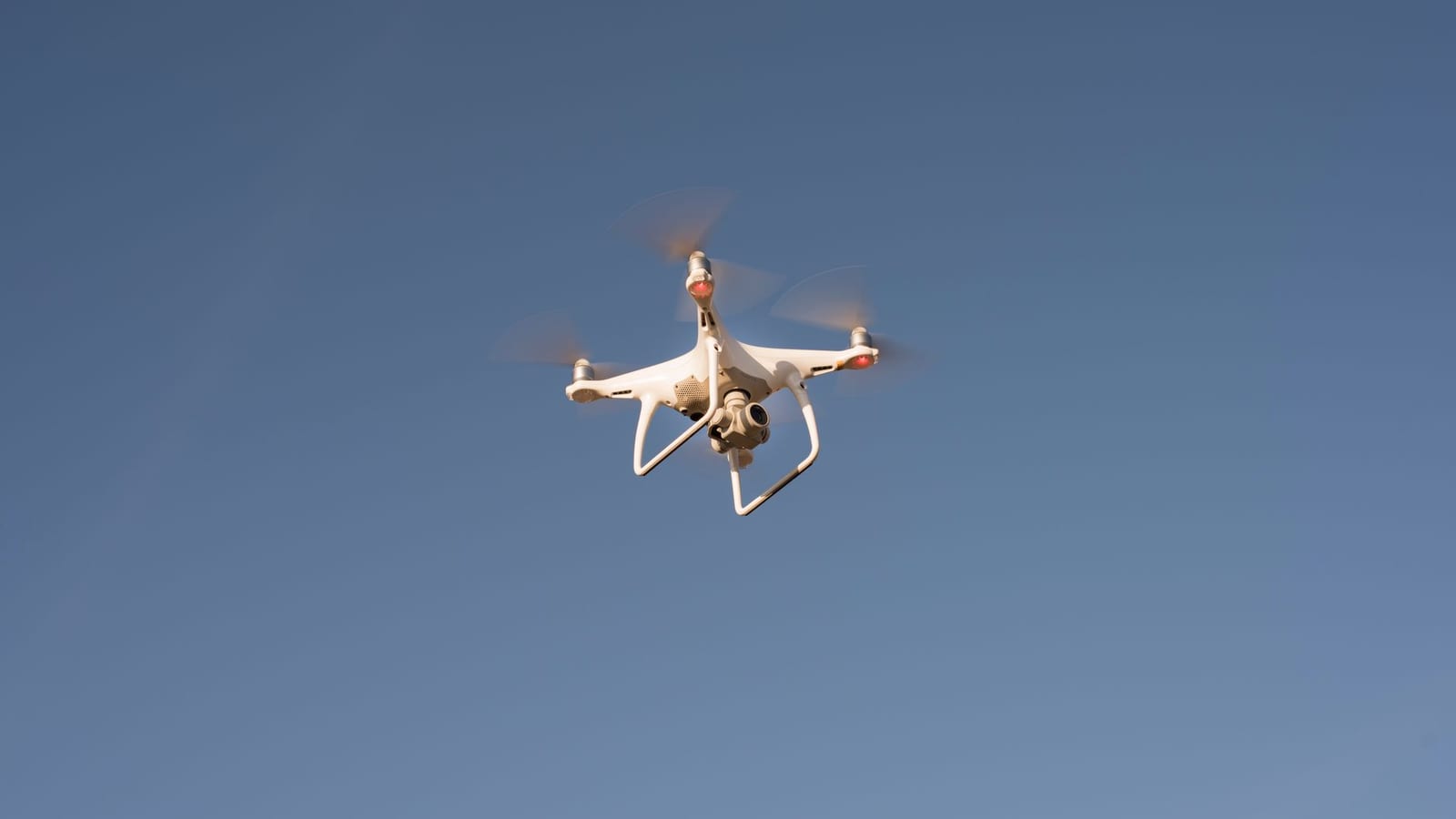
The war in Ukraine now has a new sound: not tanks rolling, but drones hunting.
The European Union has put 3.9 billion euros behind that shift. It has opened a first package to buy advanced Ukrainian drone technology for Kyiv’s defence.
For India, this is not a distant European update. It is a clear warning from the battlefield. Future wars will not wait for big platforms alone. They will move through cheap, fast, local innovation.
Europe funds the drone front
Ursula von der Leyen, the European Commission president, said Ukraine’s ingenuity has helped it resist Russia since the full-scale invasion began.
Her message was simple. Europe is no longer just sending old stock or emergency aid. It is backing Ukraine’s own defence industry, especially drones.
That matters because drones have changed the economics of war. A low-cost drone can damage a tank, watch a supply route, or force expensive air defence fire.
Ukraine has turned this into a battlefield habit. It builds, adapts, tests, and improves quickly. Europe now wants to fund that cycle at scale.
Kyiv goes after supply lines
Ukraine’s general staff said its forces hit two key logistics targets on June 29 and June 30. One was a road bridge near Azovske in occupied Zaporizhzhia.
The other was a railway bridge near Itchki in Crimea. Russia annexed Crimea in 2014, but Ukraine still treats it as occupied territory.
Kyiv said Russian forces used these routes to move troops, weapons, ammunition, and supplies. That tells us the strategy. Ukraine wants to make Russian movement slower, costlier, and more nervous.
Volodymyr Zelensky also said Ukrainian long-range strikes hit a satellite communications centre near Moscow. He said Russia used it for intelligence and troop coordination in Ukraine.
Russian authorities gave their own account. They said 419 Ukrainian drones were shot down overnight, including drones near the Moscow region. Local officials said a six-month-old child was killed.
That is the grim truth of drone war. The same technology that can hit military logistics also widens risk for civilians. Every new range brings a new moral burden.
Ukraine also faced fresh Russian attacks. Officials in Dnipropetrovsk said the death toll from a strike on Dnipro rose to seven. Zaporizhzhia officials said three people were killed and 18 wounded.
In Kharkiv, regional police said four people died and 23 were injured. They said Russian forces used missiles, aircraft, and drones against civilian areas.
A drone attack on a bus in Houbarivka killed a 75-year-old woman. Four others were injured. Numbers in war updates often look cold, but each one means a family suddenly broken.
Allies reveal their own limits
Britain has read the same battlefield lesson. Prime Minister Keir Starmer announced a defence plan worth nearly 300 billion pounds over four years.
The plan focuses on drones, nuclear deterrence, and a more flexible navy. The British defence ministry said 5 billion pounds would go into drone systems.
That includes mine-clearing drones and cheaper explosive attack drones. In plain language, Britain wants more machines that can take risks humans should not.
Poland’s position shows another side of the story. Warsaw had already given Ukraine between 10 and 14 MiG-29 fighter jets after Russia’s invasion.
But Polish Defence Minister Wladyslaw Kosiniak-Kamysz said Poland would not send its remaining MiG-29s. He said a proposed swap for Ukrainian drone technology did not happen.
His argument was blunt. Poland offered jets in exchange for drones and related capabilities. When that did not move, the jets stayed.
There is politics under this too. Relations between Warsaw and Kyiv cooled after Ukraine named a military unit after the Ukrainian Insurgent Army. Many Poles hold that group responsible for mass killings during the Second World War.
Polish President Karol Nawrocki then moved to strip Zelensky of Poland’s highest honour. Prime Minister Donald Tusk has called for calm, but the damage is visible.
This is how alliances work in real life. Countries may share an enemy, but they still carry history, domestic politics, and hard bargaining.
The war pulls in Asia
The Ukraine war has never been only about Europe. South Korea has now entered a sensitive discussion with Kyiv over two North Korean soldiers captured by Ukraine.
Ukrainian Foreign Minister Andrii Sybiha met South Korean Foreign Minister Cho Hyun in Seoul. They discussed the fate of the two men, who were captured in Russia’s Kursk region in January 2025.
South Korea wants to bring them in. Russia and North Korea also want them back. Human rights groups have warned that returning them to North Korea could place them in grave danger.
The two soldiers have reportedly said they want to go to South Korea. One told South Korean television earlier in 2026 that he expected to die if he was not sent there.
This single case says a lot. North Korean soldiers on Russia’s side, South Korea negotiating with Ukraine, and Europe funding drones. The conflict keeps stretching across continents.
For India, that wider map matters. New Delhi has ties with Russia, growing defence links with the West, and a direct interest in Asian stability.
India should watch the drone story closely. Our borders are long, difficult, and watched by rivals that study every battlefield lesson from Ukraine.
The lesson is not that drones replace everything. Tanks, aircraft, artillery, satellites, and soldiers still matter. But drones now sit at the centre of modern conflict.
A small workshop can shape a front line. A software update can change a weapon’s value. A cheap flying device can expose a costly military weakness.
That should worry every defence planner. It should also push India to build faster domestic supply chains for sensors, batteries, chips, and drone software.
The next war may not begin with a dramatic air raid. It may begin with hundreds of small machines crossing a border before dawn. Ukraine is showing the world how quickly that future has arrived.