Indian Seafarers Killed as US Strikes Gulf Tankers
Three Indian sailors died and dozens were rescued after US missiles hit Gulf tankers, raising safety and blockade questions for crews near Hormuz.
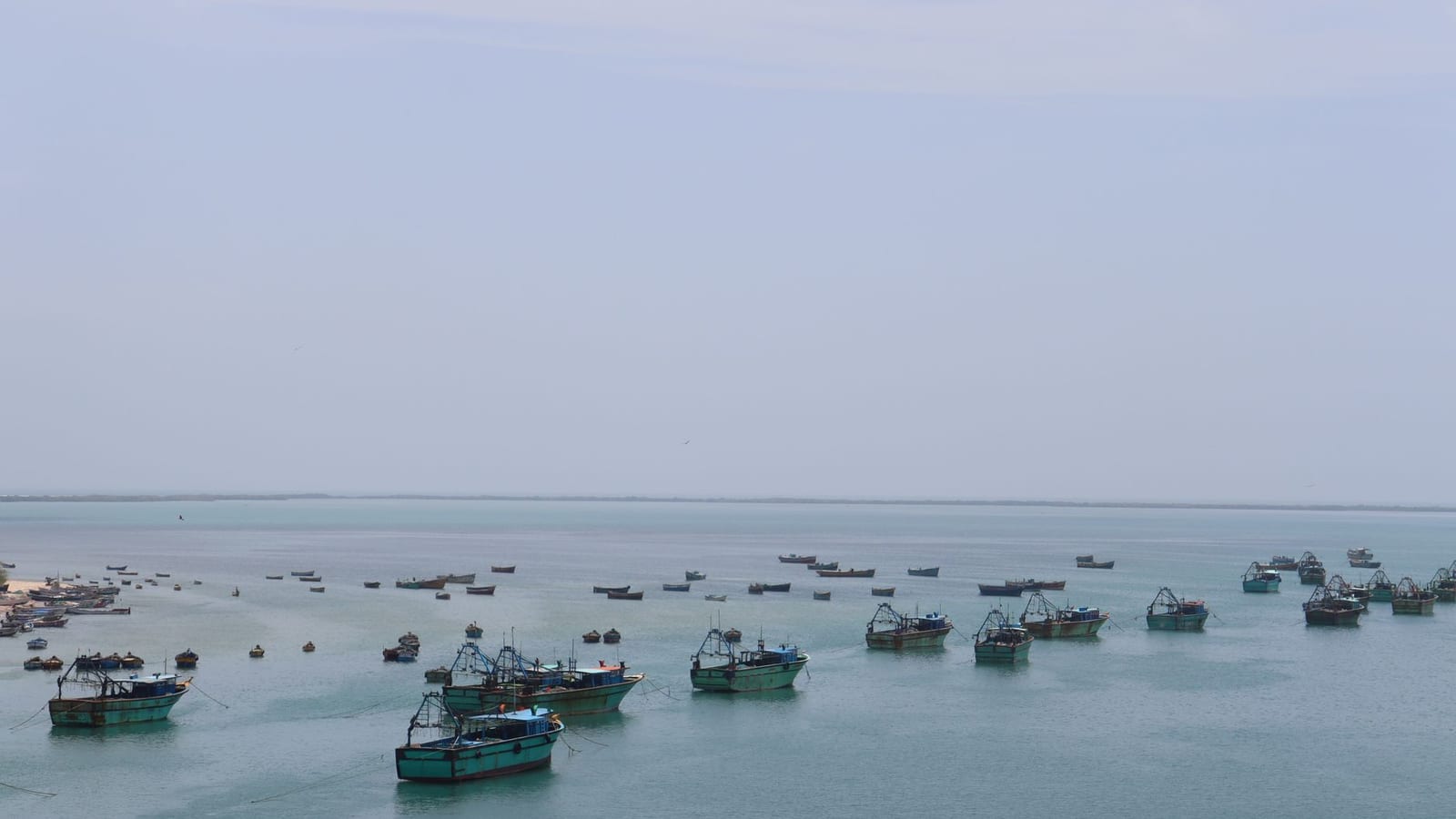
A sailor does not sign up to become a pawn in a superpower’s oil blockade.
Yet that is now the fear for hundreds of Indian seafarers near the Strait of Hormuz, one of the world’s busiest and most nervous sea lanes. Three Indian crew members are dead. Dozens more have been rescued. And two versions of the same story are coming from Washington.
For families in India waiting for a WhatsApp call from a ship, this is not geopolitics. It is a simple question. Is the route safe, and who is firing?
Washington’s two conflicting stories
US Central Command said it used Hellfire missiles to disable three commercial tankers in the Gulf of Oman. The vessels were the M/T Jalveer, M/T Settebello, and M/T Marivex.
All three had Indian crews on board, according to details shared by Indian officials. At least three Indian seafarers on the Settebello died. Sixty-five others from the three ships were rescued and brought ashore.
Centcom said the tankers violated the American blockade on Iran’s oil trade. It also released footage showing missiles being fired at the Jalveer. Its message was blunt. The blockade would apply to ships of every country.
Then Donald Trump gave a very different explanation. In a post on Truth Social, he blamed Iran for what he called a drone attack on Indian ships leaving the Hormuz Strait.
That is the part that has made this episode more alarming. The American military says it fired the missiles. The American president says Iran did it. For sailors at sea, that confusion is not a debating point. It can decide whether a ship turns, stops, or keeps moving.
India pushes back in Delhi
Ministry of External Affairs officials summoned US Charge d’Affaires Jason Meeks after another vessel with 20 Indian crew members was attacked near Oman’s coast. India had already raised a strong protest with Washington.
This is not routine diplomatic theatre. India has one of the world’s largest pools of merchant sailors. Many work on foreign-flagged ships, far from Indian waters, carrying oil, gas, chemicals, grain, and containers.
Official estimates say 622 Indian seafarers are on 13 India-flagged vessels operating around the Strait of Hormuz. Nearly 18,000 Indians work on foreign-flagged merchant ships across the wider Gulf region.
That number tells the real story. India’s exposure is not only about oil prices or foreign policy. It is about workers from coastal states, training academies, port towns, and middle-class homes.
A seafarer’s family often knows the risks of storms, engine trouble, piracy, and long silence. But missile fire from a friendly power changes the emotional maths completely.
The Directorate General of Shipping has issued a fresh security advisory for Indian mariners. Such advisories sound dry on paper. At sea, they shape watch schedules, route decisions, and emergency drills.
Why Hormuz matters to India
The Strait of Hormuz is a narrow passage between Iran and Oman. A huge share of the world’s oil moves through it. For India, it matters because West Asian energy still powers homes, transport, factories, and airlines.
When ships slow down or avoid this route, costs rise. Insurance becomes more expensive. Freight rates harden. Oil traders start pricing in fear before supplies even fall.
That eventually reaches ordinary people. Petrol pumps do not change prices because a tanker had a bad day. But repeated shocks in the Gulf can push up costs across the chain.
Airfares can rise when fuel gets dearer. Trucking bills can increase. Imported goods can cost more. Even a small jump in energy prices can pinch small businesses.
For shipping companies, the danger is more immediate. They must decide whether to cross the area, wait outside, reroute, or absorb delays. Each option costs money.
For crew members, the decision is more personal. A blocked passage means more time at sea. A conflict zone means higher risk. A missile strike means training turns into survival.
A blockade with Indian casualties
Trump authorised the current US blockade of Iranian shipping on April 13. Washington’s stated aim was to pressure Tehran into a peace agreement. That deal has not arrived.
Centcom’s position is that ships helping Iran’s oil trade can be stopped. In these cases, the command says it disabled vessels that ignored the blockade.
That may explain the military logic. It does not settle the political problem. If a commercial tanker has Indian sailors on board, India will demand answers.
The ships’ flags also complicate public understanding. A vessel may fly one country’s flag, carry cargo linked to another, operate through a third firm, and employ Indian crew. That is normal in global shipping.
So when an attack happens, responsibility can become a maze. But the dead and rescued sailors have nationalities. Their families know exactly who they are.
That is why India’s protest matters. New Delhi cannot treat this as a distant US-Iran quarrel. Indian workers are inside the blast radius.
Trump’s drone claim adds another layer. If Iran attacked the ships, the US must show evidence. If the US struck them, the White House must explain why its public line differs from Centcom’s account.
In a crisis, mixed messaging can be dangerous. Merchant vessels depend on clear warnings, predictable rules, and trusted channels. Confusion at the top can turn a tense sea lane into a trap.
Sailors face the hardest wait
For Indian seafarers still in the region, the worst part is uncertainty. They can follow advisories, monitor radio traffic, and obey instructions. But they cannot control how states choose to enforce power.
Families back home face a different kind of helplessness. Many will track ship positions online, wait for patchy calls, and read every update with dread.
This is where maritime security stops sounding like a specialist subject. It becomes the story of Indian labour in a risky global economy.
India gains from its seafarers’ skills. The world’s shipping system relies on them. Yet when conflict spreads into commercial routes, these workers often stand first in danger and last in public memory.
The Gulf has seen tensions before. But this episode carries a sharper edge because Indian deaths now sit inside a dispute between Washington and Tehran.
New Delhi will likely keep pressing the US for clarity, safety assurances, and accountability. It will also have to guide ship operators without causing panic or disrupting trade.
For ordinary Indians, the lesson is uncomfortable but clear. The price of distant conflict does not arrive only through oil bills. Sometimes it arrives through a phone call from a port, about a sailor who was just doing his job.