Motilal Oswal bets on textile exporters as demand revives
Motilal Oswal says Indian textile exporters could gain from recovering US and Europe demand, lower costs, and better order visibility ahead.
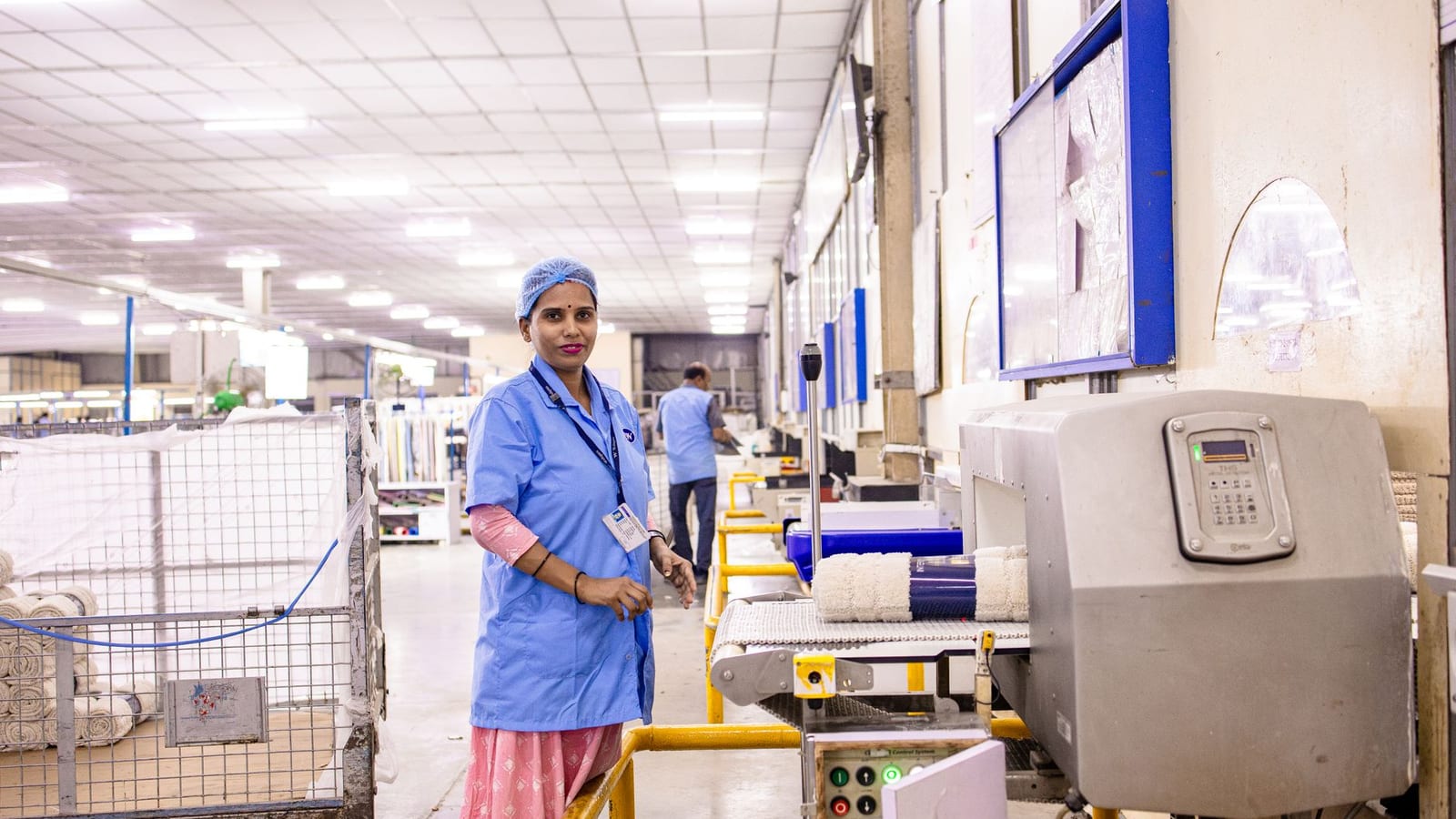
A quiet corner of Dalal Street suddenly has a shopping list.
Motilal Oswal has started coverage on eight textile and apparel stocks, with potential upside of up to 39 percent. For a retail investor, that means a ₹1 lakh bet could grow to about ₹1.39 lakh if the most bullish target plays out.
But this is not just another brokerage note. It points to a larger shift. Indian textile exporters may be entering a better cycle after a long spell of weak global demand, high costs, and cautious buyers.
Why textile stocks are back
Motilal Oswal sees global textile and apparel demand recovering slowly. Buyers in the US and Europe had spent the past few years cutting excess stock. That clean-up now looks closer to normal.
The brokerage also expects easing inflation to help. When prices cool, households in richer markets spend a little more on clothes, bedsheets, towels, and home goods.
That matters for India. Textile exporters depend heavily on global retailers. When those retailers order less, factories here feel the pain through lower sales and weaker margins.
Now, Motilal Oswal expects large Indian exporters to benefit from better demand, lower tariffs, and possible free trade agreements with the UK and European Union.
Five stocks get buy calls
The brokerage has given buy ratings to Gokaldas Exports, Arvind, Pearl Global Industries, Indo Count Industries, and Welspun Living.
Gokaldas Exports gets a target price of ₹1,110. Motilal Oswal expects its India expansion and African operations to drive growth. It sees profit after tax growing at a strong 73 percent annual rate between FY26 and FY28.
Arvind gets a target price of ₹670. The brokerage expects the company to move beyond fabrics and grow its garments business. That shift can widen its customer base and improve earnings.
Pearl Global Industries has a target price of ₹2,300. Motilal Oswal sees capacity expansion in India, Bangladesh, Vietnam, and Indonesia helping the company serve global brands better.
Indo Count Industries gets a target price of ₹550. The brokerage expects growth in utility bedding and domestic bed linen to support earnings. Welspun Living gets a target price of ₹200, helped by home textile exports and possible tariff benefits.
Three calls stay neutral
Motilal Oswal has kept neutral ratings on KPR Mill, Trident, and Vardhman Textiles. This does not mean the businesses look weak. It means the stock prices may already reflect much of the good news.
KPR Mill has a target price of ₹1,200. Trident’s target stands at ₹28. Vardhman Textiles gets a target price of ₹700.
This distinction matters for retail investors. A good company is not always a good stock at any price. In bull phases, that lesson often comes late and hurts.
Brokerage targets also need context. They are estimates, not promises. Investors still need to watch debt levels, order flow, cotton prices, currency movement, and global demand.
India’s export opening widens
Motilal Oswal says global brands now prefer large, compliant suppliers. In plain English, buyers want factories that can pass audits, deliver scale, and avoid supply chain trouble.
That trend helps bigger Indian exporters. Smaller units still dominate the sector, but many lack the systems that global brands now demand.
The brokerage estimates that the top four to five apparel players account for about 15 percent of export sales. In home textiles, the top firms account for about 28 percent.
That leaves space for consolidation. Larger companies can gain share if buyers reduce vendor lists and shift orders to safer suppliers.
Restrictions linked to Chinese cotton exports to the US also create openings. Global retailers do not want to depend too much on one sourcing country. India can benefit if it delivers quality, speed, and steady compliance.
What investors should watch now
The next big trigger sits outside company factories. Free trade agreements with the UK and European Union could change the cost equation for Indian exporters.
Lower duties make Indian products cheaper for foreign buyers. That can help a towel maker in Gujarat or a garment exporter in Karnataka win orders against rivals.
The rupee also matters. A weaker rupee can help exporters because they earn in dollars. But imported machinery, chemicals, and some inputs can become costlier.
Cotton prices remain another key risk. If raw material costs jump suddenly, companies may struggle to protect margins. Buyers do not always accept price hikes quickly.
For workers, this cycle has a direct meaning. More export orders can mean more shifts, better factory utilisation, and fresh hiring in garment hubs. For investors, it means earnings may finally catch up with the sector’s long promise.
The real story is not that eight textile stocks got fresh ratings. The real story is whether India can turn a global supply chain shift into durable business. If companies execute well, this could become more than a market trade. It could become a steady export engine for jobs, factories, and patient investors.