Vattavada Farms Draw Tourists as Kerala Village Adapts
Vattavada near Munnar is seeing farm tourism rise alongside vegetable cultivation, bringing strawberry sales, jeep rides and pressure on local roads.
Rain follows many travellers into Vattavada, but the last few metres can still surprise them.
A resort road here may look less like a road and more like a dare. One recent traveller found the car could not climb the final stretch. A jeep had to haul the bags and passengers up the sharp slope.
That is Vattavada in one frame. Beautiful, tiring, generous, and slightly unprepared for its own popularity.
Farms now share the spotlight
Vattavada sits near Munnar, about 45 km away, in Idukki district. It lies on the eastern side of the Western Ghats, close to Marayoor.
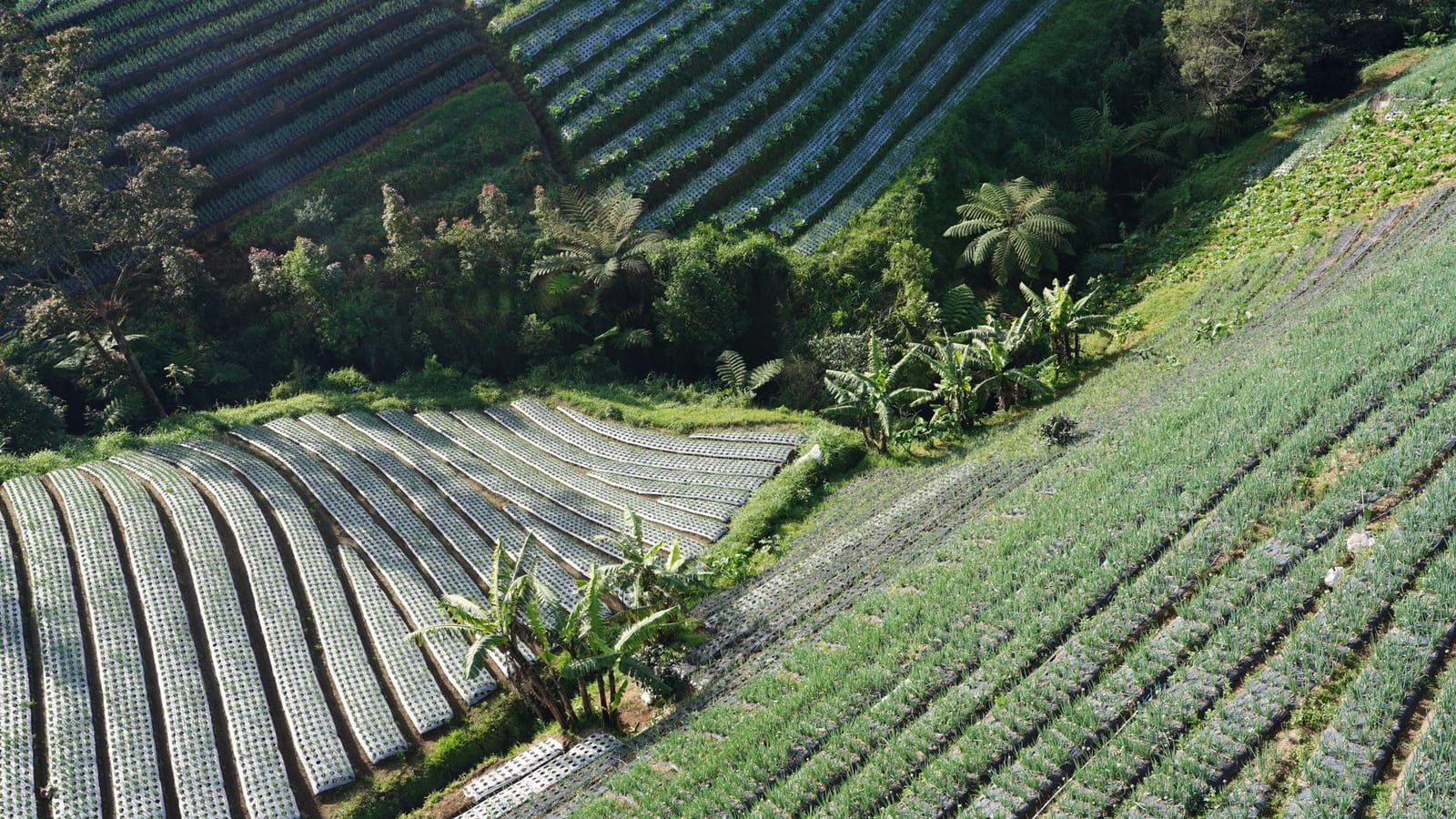
People often call it Kerala’s vegetable village. The terraces grow carrot, cabbage, beans, garlic, broccoli, and cauliflower. Strawberry farms have also become a big draw.
Tourism now runs beside farming, sometimes faster than farming itself. Local people guide visitors, sell strawberries, arrange jeep rides, and point out viewpoints.
That shift is easy to understand. A farmer may get only around Rs 10 for carrots and still call it profit. The same village can sell off-season strawberries to tourists at Rs 400 to Rs 600 a kilo.
For travellers, that sounds like a holiday story. For farmers, it is daily arithmetic. Soil, labour, transport, weather, and market prices decide the family budget.
A carrot field tells the story
The most revealing part of Vattavada may not be the waterfall or the viewpoint. It may be a narrow footpath between vegetable beds.
In one terraced farm, a young boy named Abik helped his uncle through the day. He studies in Class 4, but had reached the farm by 7 am.
The path was barely wide enough for one foot. Not an inch of land seemed wasted. That tells you why hill farming looks romantic only from a distance.
Abik pulled out carrots left after harvest. His uncle joined him and spoke about farming, prices, losses, and profit.
They still use bullocks to prepare the land. The plough loosens the soil deeply, which carrots need. Machines cannot easily replace that on steep terraces.
Nearby, an elderly woman kept bending over garlic beds, removing weeds by hand. Abik said she was his grandmother. The family would return home only after 8 pm.
That image stays longer than any postcard view. Vattavada feeds cities that rarely think about the hands behind a supermarket vegetable shelf.
The road rewards patience
The route into Vattavada runs through Pampadum Shola National Park. Night travel is not allowed there. Vehicles can pass only between 6 am and 6 pm.
That rule matters for families, older travellers, and anyone driving from Kochi or Coimbatore. Start late, and the hills decide your schedule.
The area offers a neat cluster of stops. Travellers usually include the Honey Museum, Pazhathottam viewpoint, Tiger Caves, Koviloor village, Chilanthiyar waterfall, Silver Falls, and strawberry farms.
The Honey Museum gives a quick look at bees and honey production. For children, it can work better than another viewpoint. It turns a hill trip into something tactile and simple.
But the real charm lies between listed attractions. Stop almost anywhere, and the valley opens out. Terraced farms slide down the slopes like green steps.
The catch is access. Many roads remain narrow and steep. In villages like Kottakamboor, one car can fill the lane. Homes sit close to the road, and traffic can trap residents at their own doors.
Tourism is testing village life
Vattavada’s tourism boom brings money, but it also brings pressure. The village now has to host visitors without losing its own rhythm.
The traveller’s account described local youths managing traffic jams with surprising calm. They helped vehicles pass through tight stretches and guided drivers around bends.
One man appeared first near a viewpoint, then again near a traffic jam. He guided visitors to a waterfall, helped on slippery slopes, discussed farms, and later managed vehicles.
He did not ask for money. He did not push too hard, beyond the usual strawberry sales pitch. Without him, the travellers might have missed a superb view.
That is the local tourism economy in its most informal form. No uniform, no ticket counter, no neat job title. Just a villager reading the day and stepping in.
Still, crowding has a cost. Narrow lanes were not built for weekend traffic. Farm paths were not designed for constant visitors. Quiet villages can tire before tourists notice.
For now, Vattavada’s residents seem patient. They guide, sell, advise, and adjust. But patience also needs planning, parking, toilets, waste systems, and better visitor discipline.
What travellers should know
Vattavada suits people who like slow travel, mist, farms, and village roads. It is not a polished resort circuit.
Families with older parents should plan carefully. Some viewpoints need walking. Some waterfalls require steep descents. Rain can make paths slippery within minutes.
A regular car can reach many places, but not every resort or farm road. In steep sections, local jeeps make more sense. They also reduce traffic stress inside villages.
Strawberries are seasonal, so expectations matter. Off-season fruit can be scarce and expensive. If you want the farm experience, ask before you bargain.
Travellers should also carry cash, water, light rainwear, and patience. Mobile networks may not behave consistently. Roadblocks can stretch a short drive into a long wait.
The best way to see Vattavada is not to rush through every listed point. Choose fewer stops, walk gently, ask before entering farms, and pay fairly when locals help.
Vattavada is still a farming village learning to become a travel destination. Its beauty lies in that unfinished state. If visitors treat it only as scenery, they will miss the point. The real story sits in the terraced fields, where a child, an uncle, and a grandmother work late so the rest of us can call a hill village magical.