Zelenskyy Links Russian Satellites to Iran Base Plot
Ukraine's leader says Russian satellites watched US-linked Gulf bases before Iran used the sites in strike planning, drawing Trump's scrutiny.
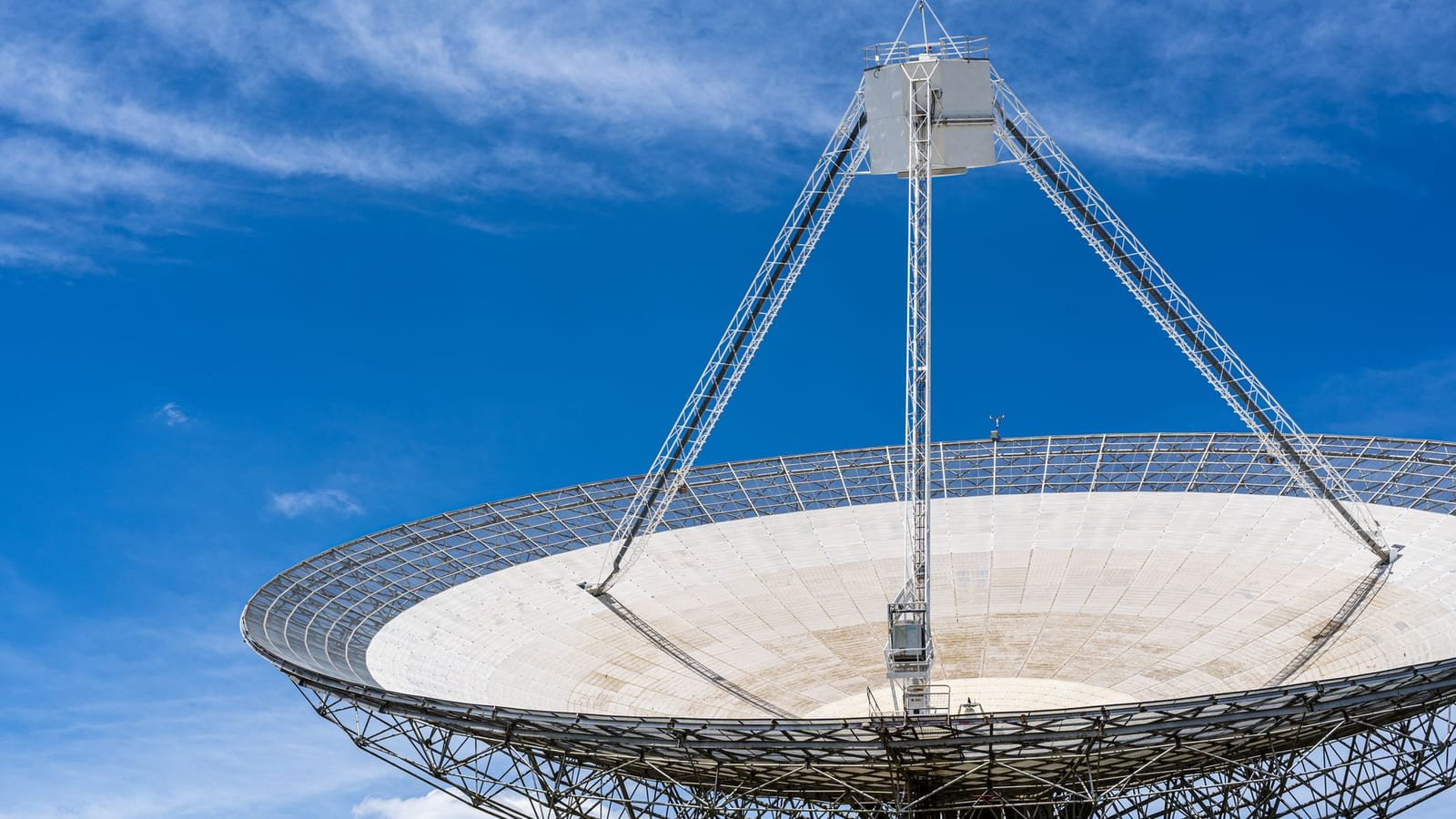
A satellite image can look cold and distant. But in the Middle East, one image can decide where a missile lands, where soldiers sleep, and which families wake up to bad news.
That is why Volodymyr Zelenskyy’s allegation has travelled far beyond Ukraine. He says Russian satellites watched US-linked military sites in the Gulf, and that those images later helped Iran plan strikes.
Donald Trump now says he will ask Vladimir Putin directly. That answer matters, because this is no longer only about Ukraine, Russia, or Iran. It is about how modern wars quietly borrow each other’s tools.
Zelenskyy points to satellite trails
Zelenskyy said Ukraine had tracked active Russian satellite surveillance over Gulf countries since early July. He said the targets included American military facilities in the region.
His sharpest claim was simple. Russian satellites looked at certain sites, and soon after, the same sites appeared in Iranian planning.
He cited four air bases as examples. These included two in Bahrain, one in Jordan, and one in Kuwait. Zelenskyy said Russian satellites focused on them on July 19 and 20.
In plain language, he accused Moscow of acting like a lookout. Not firing the weapon, but helping someone else aim better.
That distinction matters. In today’s wars, intelligence can be as valuable as ammunition. A drone, missile, or rocket becomes far more dangerous when someone knows exactly where to send it.
For American troops in the region, this is not a theory. The conflict with Iran has already killed 18 US service members, based on available figures. At least 624 others have been injured.
Among the latest deaths were three soldiers killed in an Iranian strike on Muwaffaq Salti Air Base in Jordan. Another soldier died during a controlled demolition of an Iranian drone in Iraq.
Trump keeps talks on table
Trump did not reject Zelenskyy’s allegation outright. He told reporters aboard Air Force One that he would ask Putin about it.
His tone, though, stayed firmly focused on negotiation. Trump said Iran had asked for renewed talks after recent US strikes.
He also argued that Russian help, if it happened, had not changed much. In his telling, US operations had already badly damaged Iran’s military ability.
That line serves two purposes. It reassures Americans that Washington still controls the battlefield. It also keeps room open for diplomacy.
Trump has been trying to show strength without locking himself into a wider war. That is a hard road. Every new casualty narrows the political space for patience.
Only days earlier, Trump had said he did not believe Russia or China were actively helping Iran. He wrote that Putin and Chinese President Xi Jinping had assured him they were not involved.
Now he says he will seek clarity from Putin himself. That is a shift, even if he presents it casually.
In diplomacy, questions asked in public are rarely innocent. Trump has put Putin on notice without yet accusing him directly.
Russia and Iran draw closer
The allegation fits a larger pattern. Russia and Iran have moved closer through the Ukraine war and the Middle East crisis.
Iran has supplied drones that Russia used against Ukrainian cities. Moscow, in turn, has given Tehran diplomatic cover and deeper strategic comfort.
That does not prove satellite assistance in this case. But it explains why Zelenskyy’s claim sounds plausible to many security watchers.
Russia has strong space surveillance capability. It can observe military facilities, ports, runways, and fuel depots from orbit.
Such images do not need to show every soldier or vehicle. Even basic information can help planners judge activity, readiness, and damage.
For Iran, that kind of support would be valuable. It faces US power across a wide arc, from the Gulf to Iraq and Jordan.
For Russia, helping Iran would serve a wider aim. It could stretch American attention away from Europe and Ukraine.
That is the old playbook of great-power rivalry. You do not always fight your rival directly. You raise the cost of its commitments elsewhere.
India has seen this logic before in another form. Regional crises often become testing grounds for outside powers. Local people pay the bill first.
Why India should watch closely
For India, this story may seem distant at first. It is not.
Millions of Indians live and work across the Gulf. Any escalation around US bases, oil routes, or regional airspace can quickly touch Indian families.
A nurse in Kuwait, an engineer in Bahrain, or a construction worker in Jordan may never follow satellite politics. But they feel the result when airports tighten, insurance costs rise, or employers delay projects.
Oil is the other obvious channel. The Gulf remains central to India’s energy supply. Even fear of disruption can move prices.
When crude becomes expensive, India does not feel it only at petrol pumps. Freight costs rise, food transport becomes costlier, and household budgets feel pressure.
There is also a security lesson here. Wars now run on data. Satellites, drones, cyber tools, and open-source images all sit inside the same toolbox.
A country need not send troops to join a conflict. It can send targeting data, spare parts, software, or advice.
That makes attribution difficult. Who counts as a participant? The country that fires, or the country that helps aim?
This question will matter more in the years ahead. India, too, lives in a tough neighbourhood with active borders and rival military partnerships.
If satellite data can quietly move from one capital to another, old rules look thin. Diplomats may deny involvement, while militaries prepare for the opposite.
The unanswered question for Putin
Trump’s planned question to Putin may not produce a clean answer. Putin can deny the claim, demand proof, or accuse Kyiv of spreading panic.
Zelenskyy, for his part, has urged the world not to ignore what he called a clear pattern. He framed Russia as an aggressor looking for ways to widen trouble.
US Defence Secretary Pete Hegseth has also acknowledged that America’s rivals assist Iran in some ways. He did not give details, citing classified intelligence.
That guarded language tells its own story. Governments often know more than they can reveal. Public proof may arrive late, or never.
Still, the political damage begins before proof becomes public. Once leaders believe intelligence is being shared, they change behaviour.
The US may move troops, harden bases, or strike earlier. Iran may assume deeper backing. Russia may test how far it can go without direct punishment.
That is how small signals become large dangers. A satellite pass, a leaked image, a missile strike, then retaliation.
For ordinary people, the lesson is brutally simple. Modern war does not stay neatly inside one border. It travels through servers, satellites, ports, prices, and migrant labour routes.
Trump’s conversation with Putin may sound like a diplomatic footnote. But if Zelenskyy’s charge holds, it points to a much bigger problem. The next battlefield may begin far above the earth, long before anyone hears the first explosion.