Iran Braces for Millions at Khamenei State Funeral
Iran is locking down Tehran as Ali Khamenei's coffin goes on public display for a three-day state funeral expected to draw millions.
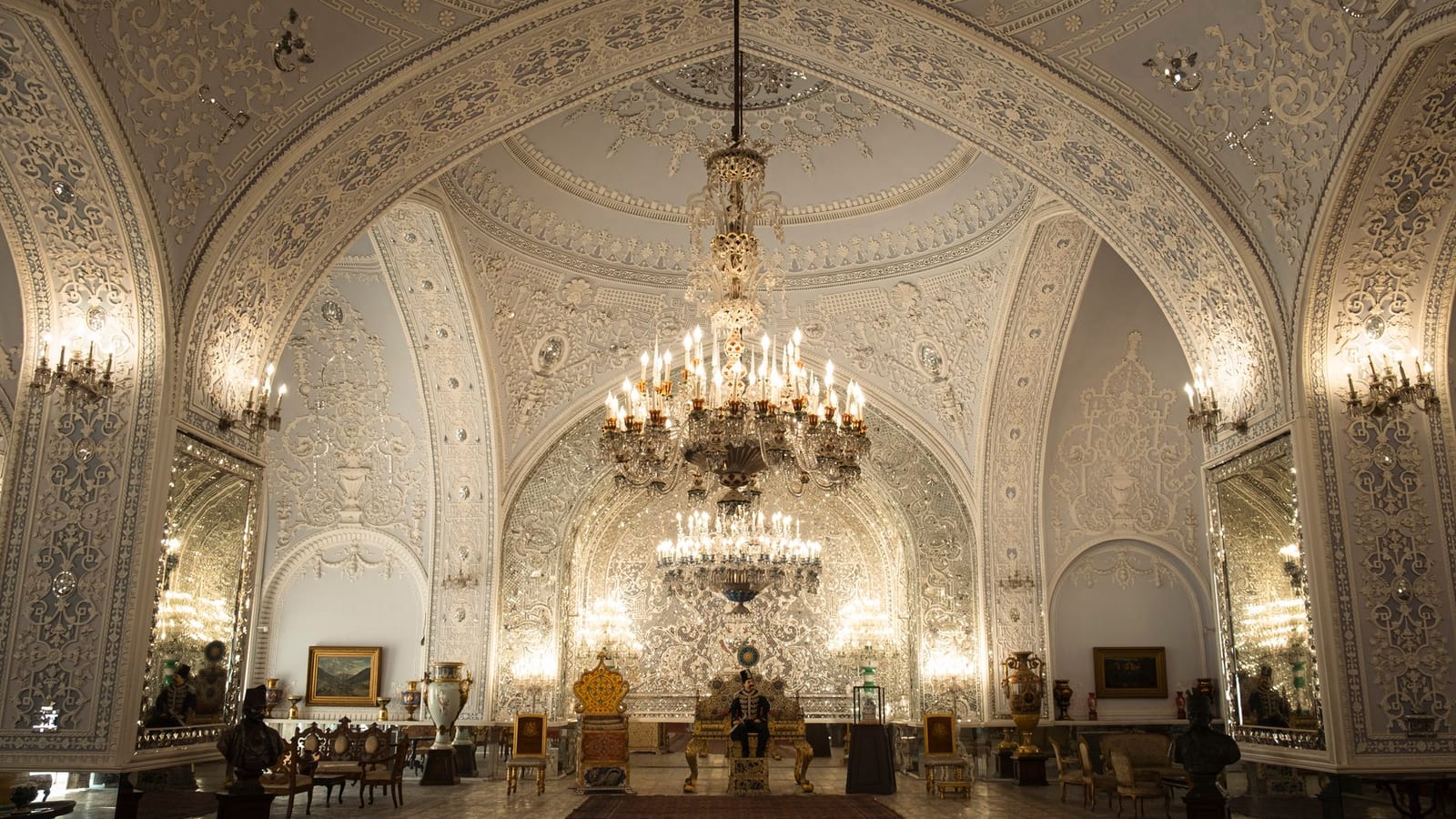
Tehran is being locked down for a funeral Iran wants the world to watch.
Four months after Ali Khamenei was killed in a US-Israeli strike, his coffin has reached the Grand Mosalla, the vast religious complex in the capital. From Saturday, July 4, Iran will begin a three-day national farewell that is part mourning, part state theatre, and part warning.
Iranian authorities expect 15 million to 20 million people in Tehran alone. That number is so large that it almost stops feeling real. Think of a city trying to absorb an ocean of mourners, security forces, clerics, officials, and cameras, all at once.
Tehran prepares for a giant goodbye
The coffin arrived on Friday, July 3, wrapped in the Iranian flag. Authorities plan to keep the body on public display day and night until Monday, July 6.
The Grand Mosalla has been dressed for a spectacle. Large portraits of Khamenei cover the walls. Black flags mark mourning. Red flags signal martyrdom and revenge, two words that carry heavy political meaning in Iran’s revolutionary vocabulary.
Mourners may start queuing from Friday night. The gates are due to open at 6 am on Saturday, local time. For families travelling across the city, this is not a normal funeral visit. It is a test of patience, heat, crowd control, and loyalty.
Tehran already looks like a fortress. Security forces have sealed off a large zone around the venue. Cars cannot enter the core area. The airport is partly closed on Friday and will close fully on Monday, which Iran has declared a national holiday.
Malls have pulled down shutters. Officials have told businesses to stop work. For ordinary Iranians, even those who stay away, the funeral has entered daily life. Travel plans, earnings, shop sales, and basic movement now bend around the state calendar.
Mourning also sends a message
Khamenei ruled longer than any supreme leader since the Islamic Republic began in 1979. Iranian authorities say he died aged 86 on February 28, when the United States and Israel struck his residence.
The funeral was first expected in March. War delayed it. That delay now gives the ceremony a larger purpose. It lets the state gather grief, anger, and discipline into one carefully controlled public act.
Iran still remembers the funeral of Ayatollah Ruhollah Khomeini in 1989. Official figures put that crowd at around 10 million. Crowd surges killed more than ten people. This week’s gathering could be larger, which makes security a political and human concern.
The coffins of Khamenei’s relatives will stand near his. They include a daughter, a son-in-law, a daughter-in-law, and a granddaughter, all killed on the first day of the war. That detail gives the funeral its emotional centre. It also strengthens the state’s argument that its leadership paid a personal price.
On Monday, a procession will carry Khamenei’s body through Tehran’s streets. Posters and slogans already call him a martyr. On Tuesday, the coffin will move to Qom, Iran’s holy city. On Wednesday, officials will take it to neighbouring Iraq, where Shia communities form a majority.
Iran plans to bury Khamenei on July 9 in Mashhad, his home city in the country’s north-east. The route tells its own story. Tehran shows state power. Qom shows religious authority. Iraq shows Iran’s claim to a wider Shia bond.
Succession remains tightly shielded
The most watched absence may be Mojtaba Khamenei, the son who succeeded him in early March. His presence has not been confirmed.
Iranian authorities say Mojtaba was wounded in the strikes that killed his father. Since then, he has not appeared in public. Officials have released statements in his name, but he has stayed out of sight.
That silence matters. Funerals of powerful leaders are also tests for successors. People watch who stands near the coffin, who receives foreign guests, and who controls the cameras.
Ahmad Vahidi, head of the Revolutionary Guards, has also appeared near the coffin, Iranian media showed. It was his first public appearance since the war began. He had kept a low profile as senior security figures faced assassination risks.
Iran expects leaders and officials from about 30 countries. The list includes former Russian president Dmitry Medvedev, Pakistan Prime Minister Shehbaz Sharif, and Chinese parliamentary official He Wei. Most guests come from Iran’s neighbourhood, where the fallout of this war is felt first.
Esmaeil Baghaei, Iran’s foreign ministry spokesman, said those attending had chosen the “right side of history”. He also attacked Western support for Israel and the United States during the two wars against Iran, in June 2025 and this year.
The timing adds edge. The funeral begins on July 4, when the United States marks 250 years of independence. Tehran will not miss that symbolism. Washington will not miss it either.
Why India should watch closely
For India, this is not a distant West Asian drama. Iran sits across a sensitive maritime neighbourhood. Trouble there can affect oil prices, shipping routes, diaspora safety, and the diplomatic balance around Pakistan and China.
New Delhi has spent years trying to keep working ties with Tehran, even when American sanctions made life difficult. India does not need a romantic view of Iran to see its importance. Geography is enough.
The guest list will matter to Indian officials. Pakistan’s prime minister is expected in Tehran. China is sending a senior parliamentary figure. Russia, already locked in its own confrontation with the West, will also be visibly present.
That does not mean a new bloc appears overnight. Funerals often attract symbolic attendance. Still, symbols matter in geopolitics. They show who is willing to be seen with whom, especially after war.
India’s challenge is familiar. It must talk to Iran without annoying Washington too much. It must watch China’s moves without sounding alarmist. It must read Pakistan’s messaging without overreacting. That is the daily grind of Indian foreign policy.
There is also the human layer. Any fresh Iran-US tension can ripple into the Gulf, where millions of Indians work. Even a small spike in fuel prices can reach a household budget in Kanpur, Kochi, Surat, or Guwahati.
For a kirana store owner, geopolitics arrives through transport costs. For young professionals paying EMIs, it shows up in inflation. For exporters, it appears as shipping uncertainty. West Asia rarely stays abroad for long.
The funeral will end, the crowds will thin, and Tehran’s roads will reopen. But Iran’s deeper question will remain: can Mojtaba Khamenei turn inherited authority into visible control? India will watch that answer carefully, because in West Asia, a succession crisis never stays neatly inside one country’s borders.